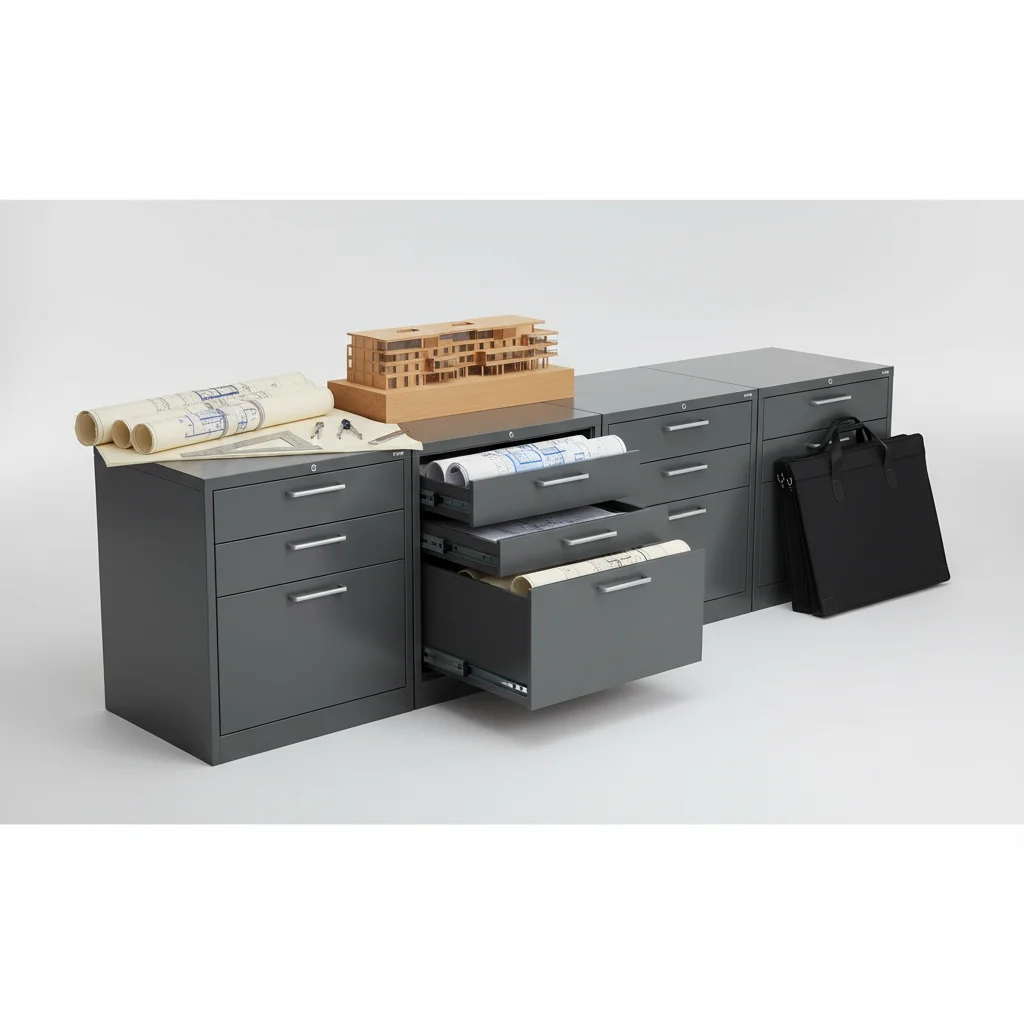
Architects require specialized filing cabinets to effectively organize and protect their crucial blueprints, drawings, and project plans. The right storage solution can significantly improve workflow and preserve the integrity of large-format documents. There are five primary types of filing cabinets that cater specifically to the unique needs of architectural practices, ensuring everything from active projects to archived plans are kept in pristine condition.
Flat File Cabinets for Large Drawings
Flat file cabinets are indispensable for architects dealing with large-format documents like blueprints, maps, and renderings. These cabinets feature wide, shallow drawers that allow documents to lie flat, preventing creases, folds, and damage that can occur in vertical storage. They are typically made of steel for durability and come in various sizes to accommodate different paper dimensions, such as D-size and E-size. Investing in a high-quality flat file cabinet ensures that your most important visual assets remain smooth and accessible for years to come.
- Prevents creasing and folding of large documents.
- Offers easy access and retrieval of plans.
- Protects against dust and environmental damage.
- Available in multiple drawer configurations.
- Ideal for long-term archival of critical designs.
Vertical Plan Files for Space Efficiency
For architectural firms with limited floor space, vertical plan files offer an excellent alternative to flat files. These cabinets store documents vertically using clamps or hangers, which can be a more space-efficient method for active projects. While they might introduce a slight curl to documents over time, their ability to hold a large volume of plans in a compact footprint makes them a popular choice. Many models feature sturdy steel construction and locking mechanisms for security.
Roll File Cabinets for Project Portability
|
Our Picks for the Best Filing Cabinet in 2026
As an Amazon Associate I earn from qualifying purchases.
|
||
| Num | Product | Action |
|---|---|---|
| 1 | 2 Drawer Locking Filing Cabinet | Pre-Assembled Steel Construction | Space-Saving Design is Perfect for Home and Small Office | Letter-Size | Assembled in North America |

|
| 2 | Lorell NuSparc 3 Drawer Locking Filing Cabinet | Pre-Assembled Steel Construction | Space-Saving Design is Perfect for Home and Small Office | Letter-Size | Assembled in North America |
|
| 3 | 3 Drawer Tall File Cabinet with Wheels, Farmhouse Vertical Filing Cabinet Fits Letter/A4 Size, Rolling File Cabinets Wooden Printer Stand for Home Office, Rustic White |
|
| 4 | Letaya 3 Drawer Mobile File Cabinet with Lock,Under Desk Metal Filing Cabinets for Home Office Organizer Letters/Legal/A4((Fully Assembled-Black) |
|
| 5 | 2 Drawer Small File Cabinet with Lock, Farmhouse Vertical Filing Cabinet Fits Letter and A4 Size, Under Desk Wooden File Cabinets for Home Office, Printer Stand, Rustic White |
|
| 6 | 3 Drawer Small File Cabinet with Wheels, Farmhouse Vertical Filing Cabinet Fits Letter/A4 Size, Rolling File Cabinets Wooden Printer Stand for Home Office, Rustic White |
|
| 7 | VASAGLE 2-Drawer File Cabinet, Small Rolling Filing Cabinet for Home Office, Printer Stand, for A4, Letter-Size Documents, 15.7 x 16.5 x 27.6 Inches, Snow White UOFC040W46 |
|
| 8 | VASAGLE 2-Drawer File Cabinet, Small Rolling Filing Cabinet for Home Office, Printer Stand, for A4, Letter-Size Documents, 15.7 x 16.5 x 27.6 Inches, Ink Black UOFC040B16 |
|
| 9 | HOOBRO 2 Drawer File Cabinet with Lock, Under Desk Mobile Filing Cabinet for Home Office, Wooden Farmhouse Office Storage Cabinet, Printer Stand Fits Letter and A4 Size, Walnut and White WH66WJ01 |
|
| 10 | VASAGLE 2 Drawers File Cabinet with Lock, Printer Stand, Office Filing Cabinet Organizer, for A4 and Letter Size Documents, Ink Black UOFC061B16 |
|
Roll file cabinets are designed for architects who frequently transport or store rolled-up blueprints and plans. These units consist of individual tubes or compartments where documents can be rolled and inserted, protecting them from tears and creases during transit or storage. They are particularly useful for on-site visits or for organizing project-specific sets of drawings. Some models are mobile, allowing for easy relocation within the office or to different job sites.
Hybrid Filing Systems for Diverse Needs
Modern architectural practices often benefit from hybrid filing systems that combine elements of different cabinet types. These systems might integrate flat file drawers with smaller drawers for samples, specifications, or project binders. This versatility allows architects to consolidate various project-related materials into a single, organized unit, streamlining their workflow and reducing clutter. Custom-designed hybrid solutions can be particularly effective for firms with unique storage requirements.
Fireproof Filing Cabinets for Document Security
Protecting irreplaceable architectural plans and legal documents from fire and water damage is paramount. Fireproof filing cabinets offer an essential layer of security, safeguarding critical designs and contracts. These cabinets are constructed with insulated walls and often feature water-resistant seals, providing peace of mind against unforeseen disasters. While they may be a larger investment, the protection they offer for intellectual property and client work is invaluable for any architectural firm.
Choosing the Right Cabinet for Your Practice
Selecting the appropriate filing cabinet for an architectural practice depends on several factors, including the volume and size of documents, available space, and security needs. Flat file cabinets are ideal for preserving large, delicate drawings, while vertical plan files save space. Roll files are excellent for portability, and hybrid systems offer versatility. For ultimate protection, fireproof cabinets are a must. Carefully assess your firm’s specific requirements to ensure you invest in a storage solution that enhances efficiency and protects your valuable work.
Get our weekly buyer guide
Practical specs, not advice. Unsubscribe anytime.

I recently upgraded our office with a new flat file cabinet after reading about them, and it’s been a game-changer for our large drawings. No more rolled-up blueprints getting damaged! The steel construction feels incredibly sturdy, and the shallow drawers make it so easy to access specific plans without rummaging. Definitely worth the investment for any architectural firm.
Our firm just got a new set of mobile plan centers, and they are fantastic for our collaborative projects. Being able to easily move the entire set of plans from one workstation to another has really streamlined our workflow. The durability is also impressive, holding up well to daily use in a busy office environment. Highly recommend these for dynamic teams.
I was looking for something to help organize our archived plans and decided to try a roll file cabinet. While it does save space, getting specific older plans out can be a bit of a hassle when they’re all rolled up together. It’s good for long-term storage where you don’t need frequent access, but for anything else, I’d probably look at a different type of cabinet.
We’ve been using vertical plan files for our active projects for a while now, and they really do save a lot of space. It’s great for quick access to current blueprints. My only minor complaint is that sometimes the clamps can leave a slight indentation if you’re not careful, but overall, it’s a solid solution for keeping things organized and accessible.