Choosing the best filing cabinet for a home office in 2026 involves balancing document volume, available space, and aesthetic preferences. Key considerations include selecting between vertical, lateral, or mobile types, and materials like steel for durability, wood for aesthetics, or laminate for budget-friendliness. For instance, a compact mobile pedestal is ideal for small spaces, while a 2-drawer lateral cabinet (around 30-36 inches wide) suits larger document collections, ensuring both organization and security for important papers.
What is a Filing Cabinet?
A filing cabinet is an essential piece of office furniture designed to store paper documents in an organized and secure manner. Typically featuring multiple drawers, these cabinets help prevent clutter, protect sensitive information, and ensure that important records are easily retrievable when needed. From traditional designs to modern, mobile units, filing cabinets come in a variety of forms, each tailored to different storage volumes, space constraints, and aesthetic preferences. They are indispensable for anyone looking to maintain a tidy and efficient home office.
Popular Types of Filing Cabinets
The market offers a wide array of filing cabinet types, each with distinct advantages and ideal applications. Understanding these differences is key to selecting the right solution for your home office. For expert home reviews on this site.
Vertical Filing Cabinets
Vertical filing cabinets are the most traditional and recognizable type, characterized by drawers that extend outward and store documents facing front-to-back. Their tall, narrow design makes them excellent for smaller home offices where floor space is at a premium. They are commonly available with two to five drawers and are budget-friendly.
- Advantages: Space-saving footprint, generally more affordable, widely available.
- Disadvantages: Can be harder to browse many files at once, heavier when fully loaded.
- Application: Ideal for individual users with moderate filing needs in compact spaces.
Lateral Filing Cabinets
Lateral filing cabinets are wider than vertical models, with drawers that extend horizontally, allowing documents to be filed side-to-side or front-to-back. This design provides a larger storage capacity per drawer and makes browsing files easier. They often double as credenzas or side tables due to their broader top surface.
- Advantages: High storage capacity, easier file browsing, can serve as additional surface area.
- Disadvantages: Requires more floor space, typically more expensive than vertical cabinets.
- Application: Suited for home offices with ample space and extensive filing requirements, or where a wider piece of furniture is desired.
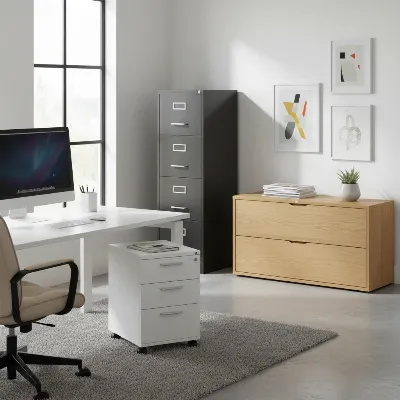 Various types of filing cabinets including vertical, lateral, and mobile, in a modern home office setting.
Mobile Filing Cabinets
|
Our Picks for the Best Filing Cabinet in 2026
As an Amazon Associate I earn from qualifying purchases.
|
||
| Num | Product | Action |
|---|---|---|
| 1 | VASAGLE 2 Drawers File Cabinet with Lock, Printer Stand, Office Filing Cabinet Organizer, for A4 and Letter Size Documents, Ink Black UOFC061B16 |

|
| 2 | 3 Drawer Tall File Cabinet with Wheels, Farmhouse Vertical Filing Cabinet Fits Letter/A4 Size, Rolling File Cabinets Wooden Printer Stand for Home Office, Rustic White |
|
| 3 | 2 Drawer Locking Filing Cabinet | Pre-Assembled Steel Construction | Space-Saving Design is Perfect for Home and Small Office | Letter-Size | Assembled in North America |
|
| 4 | VASAGLE 2-Drawer File Cabinet, Small Rolling Filing Cabinet for Home Office, Printer Stand, for A4, Letter-Size Documents, 15.7 x 16.5 x 27.6 Inches, Ink Black UOFC040B16 |
|
| 5 | Letaya 3 Drawer Mobile File Cabinet with Lock,Under Desk Metal Filing Cabinets for Home Office Organizer Letters/Legal/A4((Fully Assembled-Black) |
|
| 6 | VASAGLE 2-Drawer File Cabinet, Small Rolling Filing Cabinet for Home Office, Printer Stand, for A4, Letter-Size Documents, 15.7 x 16.5 x 27.6 Inches, Snow White UOFC040W46 |
|
| 7 | 3 Drawer Small File Cabinet with Wheels, Farmhouse Vertical Filing Cabinet Fits Letter/A4 Size, Rolling File Cabinets Wooden Printer Stand for Home Office, Rustic White |
|
| 8 | HOOBRO 2 Drawer File Cabinet with Lock, Under Desk Mobile Filing Cabinet for Home Office, Wooden Farmhouse Office Storage Cabinet, Printer Stand Fits Letter and A4 Size, Walnut and White WH66WJ01 |
|
| 9 | Lorell NuSparc 3 Drawer Locking Filing Cabinet | Pre-Assembled Steel Construction | Space-Saving Design is Perfect for Home and Small Office | Letter-Size | Assembled in North America |
|
| 10 | 2 Drawer Small File Cabinet with Lock, Farmhouse Vertical Filing Cabinet Fits Letter and A4 Size, Under Desk Wooden File Cabinets for Home Office, Printer Stand, Rustic White |
|
Mobile filing cabinets, also known as rolling file cabinets or pedestals, are equipped with casters, making them easy to move around the office. They are typically smaller, often with two or three drawers, and designed to fit neatly under a desk. Many feature locking wheels for stability and a central lock for security.
- Advantages: Excellent portability and flexibility, space-saving (fits under desks), often includes utility drawers.
- Disadvantages: Limited storage capacity compared to larger cabinets, may not offer the same level of heavy-duty security.
- Application: Perfect for flexible workspaces, small home offices, or for individuals who need to move their files frequently.
Materials and Construction: Comparing Filing Cabinets
The material of a filing cabinet impacts its durability, security, aesthetics, and cost. Common materials include steel, wood, and laminate, each offering a unique set of benefits.
Steel Filing Cabinets
Steel cabinets are a popular choice due to their robust construction and durability. They offer a high level of security for documents and are resistant to wear and tear.
- Pros: Highly durable, excellent security, fire-resistant options available, modern aesthetic, often more affordable than solid wood.
- Cons: Can be heavy, may clash with traditional decor, can dent if impacted.
- Applications: Best for storing confidential documents, high-traffic use, or when a contemporary look is desired.
Wood Filing Cabinets
Wooden filing cabinets provide a more traditional and elegant aesthetic. They often come in various finishes, adding warmth and sophistication to a home office.
- Pros: Aesthetically pleasing, blends well with classic decor, offers a professional look.
- Cons: Can be more expensive, less durable than steel against heavy impact, may require more maintenance, typically less secure without added features.
- Applications: Suitable for executive home offices, combining storage with decorative appeal.
Laminate Filing Cabinets
Laminate cabinets are an economical alternative that can mimic the look of wood or steel. They are typically made from particleboard or MDF with a laminate finish.
- Pros: Affordable, lightweight and easy to move, wide range of aesthetic finishes.
- Cons: Less durable than steel or solid wood, prone to chipping or peeling over time, lower security.
- Applications: Good for budget-conscious buyers, light-duty use, or temporary setups.
| Feature | Steel Filing Cabinets | Wood Filing Cabinets | Laminate Filing Cabinets |
|---|---|---|---|
| Durability | High (resistant to wear, impact) | Moderate (can scratch, dent; solid wood is more durable) | Low (prone to chipping, peeling) |
| Security | High (often with robust locking mechanisms, fireproof) | Moderate (depends on lock quality; generally less secure) | Low (easily compromised) |
| Aesthetics | Modern, industrial, sleek (various colors) | Traditional, classic, elegant (various wood finishes) | Versatile (mimics wood/steel, wide color range) |
| Price | Mid-range to High (especially for fireproof) | High (especially for solid wood) | Low-range |
| Maintenance | Low (easy to clean, minimal upkeep) | Moderate (may require polishing, careful cleaning) | Low (easy to wipe clean) |
| Weight | Heavy | Moderate to Heavy | Lightweight |
How to Choose the Right Filing Cabinet (Buying Guide)
Selecting the best filing cabinet involves a thoughtful evaluation of your specific needs, the nature of your documents, and your home office environment.
1. Determine Your Storage Needs
Start by assessing the volume and type of documents you need to store. Do you have many legal-sized papers, or mostly letter-sized? How frequently will you access them?
- Document Volume: For a small number of active files, a mobile pedestal might suffice. Extensive archives might require a larger lateral or multiple vertical cabinets.
- Document Size: Ensure the drawers can accommodate letter, legal, or even A4 documents with adjustable hanging rails.
- Space Usage: Consider if you need a cabinet purely for storage, or one that can also serve as a printer stand, end table, or credenza.
2. Evaluate Available Space
Measure the exact dimensions of the area where the cabinet will be placed. to account for drawer extension, ensuring there’s enough clearance for drawers to open fully without obstructing walkways or other furniture.
- Under-Desk Options: For tight spaces, a slim, mobile pedestal that fits under your desk is often the best choice.
- Room Layout: Vertical cabinets are great for narrow spaces, while lateral cabinets work well along walls or as room dividers in larger areas.
3. Choose the Right Material
As discussed, steel offers maximum durability and security, wood provides aesthetic appeal, and laminate is a budget-friendly option.
- Security Needs: If storing sensitive documents, prioritize steel cabinets with robust locking mechanisms and consider fireproof options.
- Aesthetic Harmony: Choose a material and finish that complements your existing home office decor.
4. Prioritize Security Features
For confidential or sensitive documents, security is paramount.
- Locking Mechanisms: Look for cabinets with a single lock that secures all drawers, and ensure keys are included.
- Anti-Tip Features: Especially for taller vertical cabinets or mobile units, anti-tip interlocks or a fifth caster wheel prevent the cabinet from toppling when drawers are open.
- Fire/Water Resistance: While more expensive, fireproof and water-resistant cabinets offer invaluable protection against unforeseen disasters for critical documents.
5. Consider Brands and Reputation
Reputable brands often offer better build quality, reliable customer service, and longer warranties. Read reviews and consider brands known for their office furniture.
6. Set a Realistic Budget
Filing cabinets vary significantly in price. Basic laminate or light-duty steel models can be very affordable, while high-end wood or heavy-duty fireproof steel cabinets can be a substantial investment. Determine your budget upfront and seek the best combination of quality, features, and value within that range. Investing in a higher-quality cabinet can often save money long-term by extending its lifespan and reducing replacement needs.
Top Filing Cabinet Models for Home Office
Based on recent trends and reviews, modern home office filing cabinets prioritize a blend of compact design, mobility, and aesthetic appeal, often with enhanced security. While specific “top 10” lists can vary, several popular types and models consistently receive high marks for their suitability in a home environment.
-
Compact Mobile Pedestals: Brands like Devaise and VASAGLE offer highly-rated 2- or 3-drawer mobile file cabinets. These typically feature smooth-gliding, full-extension drawers for letter/legal/A4 files, a single lock for all drawers, and locking casters. Their minimalist design makes them fit seamlessly under most desks, maximizing floor space.
-
Stylish Lateral File Cabinets: For those seeking both storage and aesthetics, models from Bush Furniture (e.g., Modern Farmhouse Lateral File Cabinet) and Laura Davidson (Stockpile Curve File Cabinet) are popular. These often boast decorative finishes (like farmhouse wood or sleek curved metal) and sturdy construction, sometimes even serving as accent furniture. They provide generous space and can support heavier items on top.
-
Heavy-Duty Steel Cabinets: For maximum security and durability in a home setting, models similar to Mount-It! 3-Drawer Rolling File Cabinet or SISESOL White Rolling File Cabinet are favored. While offering the robustness of steel, modern iterations often come in lighter colors (white, grey) and more compact designs than traditional office versions, ensuring they don’t overpower a home aesthetic. These typically feature anti-tip mechanisms and strong locks.
-
Multi-functional Storage Units: Some filing solutions go beyond simple drawers, integrating shelving for books or decorative items. While not always dedicated “filing cabinets,” credenzas or printer stands with file drawers offer a versatile approach to home office organization, such as those seen from Martin Furniture or Ashley Furniture that combine storage with display options.
When choosing, consider the balance between pure filing capacity and how the cabinet integrates into your home’s aesthetic and multi-functional needs. Reviews often praise models for ease of assembly (or lack thereof), drawer smoothness, and overall sturdiness.
Smart Organization and Maintenance Tips for Your Filing Cabinet
A filing cabinet is only as effective as the system you put in place. Implementing smart organization and regular maintenance will ensure your documents remain accessible and your cabinet stays in top condition.
1. Declutter Before You File
Before organizing, empty your cabinet and purge unnecessary documents. Shred old statements, expired warranties, or anything you no longer need. This prevents a buildup of irrelevant papers and creates space for what truly matters.
2. Choose a Consistent Filing Method
An effective system makes finding documents a breeze.
- Alphabetical: Ideal for client names, vendor invoices, or personal records.
- Chronological: Best for bills, receipts, or contracts where date is the primary retrieval method.
- Category-Based: Group documents into broad categories (e.g., “Taxes,” “Medical,” “Household,” “Work Projects”) with subcategories.
3. Use Clear Labels and Color-Coding
Investing in a label maker ensures clear, consistent, and professional-looking labels for both hanging files and individual folders.
- Labeling Best Practices: Use simple, descriptive names (e.g., “2026 Tax Returns” instead of “Tax Stuff”).
- Color-Coding: Assigning different colors to major categories (e.g., blue for financial, red for medical) allows for quick visual identification.
4. Maximize Space with Hanging Files and Dividers
Hanging file folders suspend from rails within the drawer, making it easy to slide and access files. Use interior folders within hanging files for subcategories. Adjustable dividers help keep stacks tidy and prevent papers from slumping.
5. File Immediately and Consistently
The key to maintaining an organized system is to file new documents as soon as they arrive. Don’t let papers pile up on your desk, as this quickly leads to disarray. Dedicate a few minutes each week to filing.
6. Regular Maintenance for Your Cabinet
- Cleaning: Wipe down metal or laminate cabinets with a damp cloth and mild cleaner. For wood, use appropriate wood polish to maintain its luster.
- Drawer Functionality: Periodically check drawer slides for smoothness. If they stick, a silicone-based lubricant can help.
- Lock Mechanisms: Ensure locks are functioning properly. Lubricate if they feel stiff.
7. Digitization for Backup
Consider scanning critical documents and storing them digitally as a backup. This provides an extra layer of security and can help reduce the volume of physical papers you need to store.
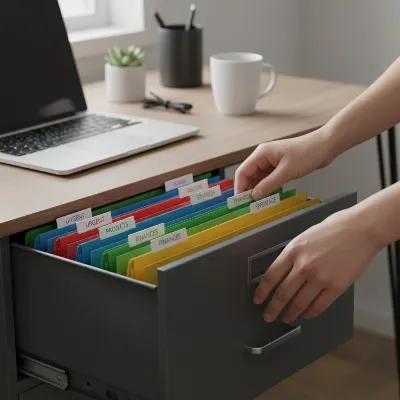 A person organizing color-coded files in a neat filing cabinet drawer in a home office.
Filing Cabinet Pricing on the Market
The price of a filing cabinet can vary significantly, ranging from under $100 for basic models to over $1,000 for high-end or specialized units. Several factors influence this cost.
Price Segments
- Budget-Friendly (Under $150): These often include compact mobile pedestals, vertical cabinets with 2-3 drawers made of lighter gauge steel or laminate. They are ideal for minimal storage needs and small home offices.
- Mid-Range ($150 – $400): This segment offers more robust steel cabinets, larger vertical or lateral options, and entry-level wooden or higher-quality laminate models. You’ll find better drawer mechanisms, improved security features, and more aesthetic finishes here.
- Premium ($400+): This category includes solid wood cabinets, heavy-duty lateral filing cabinets, fireproof options, and designer pieces. These offer superior durability, advanced security, and often come with enhanced aesthetic appeal and longer warranties.
Factors Affecting Price
- Material: Steel and solid wood cabinets are generally more expensive than laminate or particle board. Fireproof steel cabinets command the highest prices due to specialized construction.
- Size and Capacity: Larger cabinets, especially lateral ones with more drawers, will naturally cost more than smaller, compact units.
- Features: Additional features like anti-tip mechanisms, full-extension ball-bearing slides, robust locking systems, adjustable hanging rails, and integrated utility drawers increase the price.
- Brand Reputation: Well-known brands with a reputation for quality and durability often have higher price points, but this typically reflects better craftsmanship and customer support.
- Design and Aesthetics: Cabinets designed to blend seamlessly with home decor, featuring unique finishes, hardware, or multi-functional aspects (e.g., a lateral file doubling as a credenza), will be more expensive.
When budgeting, consider the long-term value. A higher initial investment in a durable, feature-rich cabinet can save money on replacements and repairs down the line, while also providing peace of mind for your important documents.
Conclusion
Choosing the ideal filing cabinet for your home office involves more than just picking a box with drawers; it’s about investing in an organized, efficient, and secure workspace. By understanding the different types—vertical, lateral, and mobile—and considering the various materials like steel, wood, and laminate, you can align your choice with your specific needs for capacity, durability, and aesthetic harmony. Prioritizing features such as robust locking mechanisms and smooth drawer operation ensures both security and ease of use. A well-selected filing cabinet, coupled with smart organization practices, will improve your home office into a more productive and clutter-free environment. What aspect of filing cabinet organization do you find most challenging in your own workspace?
Frequently Asked Questions
What is the ideal size for a home office filing cabinet?
The ideal size largely depends on your document volume and available space. For small spaces or under-desk use, a 15-16 inch wide mobile pedestal is often perfect. For larger document collections, a 2-drawer lateral cabinet (around 30-36 inches wide) or a taller 3-4 drawer vertical cabinet can be more suitable, maximizing storage while fitting comfortably into your room layout.
How important are locking mechanisms on a home office filing cabinet?
Locking mechanisms are crucial for protecting sensitive personal and financial documents. While a thin metal cabinet lock might not deter a determined intruder, it provides an essential layer of security against casual access, especially in shared home environments, safeguarding your privacy and preventing accidental tampering.
Can a filing cabinet improve my home office aesthetics?
Absolutely. Modern filing cabinets are designed with aesthetics in mind, coming in various materials, colors, and styles. Wood or laminate cabinets can add warmth, while sleek steel designs offer a contemporary touch. Many lateral cabinets are crafted to double as stylish credenzas or side tables, enhancing both functionality and visual appeal.
What’s the best way to prevent a filing cabinet from tipping?
To prevent tipping, especially with taller or mobile cabinets, look for models with anti-tip mechanisms. These often include an interlock system that only allows one drawer to open at a time, or a fifth caster wheel on mobile units for added stability. Always place heavier items in the bottom drawers to lower the center of gravity.
How often should I purge documents from my filing cabinet?
Regular purging is key to maintaining an efficient system. Aim to review your files annually, or at least every two years. Shred any outdated, irrelevant, or duplicate documents that are no longer needed, especially sensitive information. This keeps your cabinet from becoming overcrowded and makes it easier to find essential papers.
Frequently Asked Questions
What is the ideal size for a home office filing cabinet?
The ideal size depends on your document volume and available space. For small spaces, a 15-16 inch wide mobile pedestal is often perfect. For larger collections, a 2-drawer lateral cabinet (around 30-36 inches wide) or a taller 3-4 drawer vertical cabinet is more suitable.
How important are locking mechanisms on a home office filing cabinet?
Locking mechanisms are crucial for protecting sensitive personal and financial documents. While not impenetrable, a lock provides an essential layer of security against casual access, especially in shared home environments, safeguarding your privacy and preventing accidental tampering.
Can a filing cabinet improve my home office aesthetics?
Absolutely. Modern filing cabinets are designed with aesthetics in mind, coming in various materials, colors, and styles. Many lateral cabinets are crafted to double as stylish credenzas or side tables, enhancing both functionality and visual appeal in your home office.
What's the best way to prevent a filing cabinet from tipping?
To prevent tipping, especially with taller or mobile cabinets, look for models with anti-tip mechanisms. These often include an interlock system that only allows one drawer to open at a time, or a fifth caster wheel on mobile units for added stability. Always place heavier items in the bottom drawers.
How often should I purge documents from my filing cabinet?
Regular purging is key to maintaining an efficient system. Aim to review your files annually, or at least every two years. Shred any outdated, irrelevant, or duplicate documents that are no longer needed, especially sensitive information, to keep your cabinet organized.
How to Choose the Right Filing Cabinet for Your Home Office
Selecting the best filing cabinet involves evaluating your storage needs, available space, material preferences, and security requirements to ensure an organized and efficient home office.
Assess the volume and type of documents you need to store, considering if they are letter-sized, legal-sized, or A4. For a small number of active files, a mobile pedestal might suffice, while extensive archives may require a larger lateral or multiple vertical cabinets.
Measure the exact dimensions of the area where the cabinet will be placed, accounting for drawer extension. Vertical cabinets are great for narrow spaces, while lateral cabinets work well along walls or as room dividers in larger areas.
Consider steel for maximum durability and security, wood for aesthetic appeal, or laminate for a budget-friendly option. If storing sensitive documents, prioritize steel cabinets with robust locking mechanisms and consider fireproof options.
For confidential documents, look for cabinets with a single lock that secures all drawers. Also, consider anti-tip features like interlocks or a fifth caster wheel for taller or mobile units, and fire/water resistance for critical documents.
Filing cabinets range from under $100 for basic models to over $1,000 for high-end units. Determine your budget upfront and seek the best combination of quality, features, and value within that range, as a higher initial investment can save money long-term.
Get our weekly buyer guide
Practical specs, not advice. Unsubscribe anytime.

The steel filing cabinet I bought is incredibly durable, just as I’d hoped. It’s a vertical type, which works well in my corner space. I appreciate how sturdy it feels, and I’m confident it will last for years. It’s definitely a step up from my old plastic storage bins.
I got a mobile pedestal cabinet for my small home office, and while it’s great for space-saving, the wheels feel a bit flimsy. It rolls fine on my hard floor, but I’m not sure how it would hold up on carpet. For the price, I expected a little more robust construction, but it does the job for now.
I was looking for something that would blend in with my existing furniture, and a wood filing cabinet was the perfect choice. It adds a touch of elegance to my home office instead of looking purely utilitarian. It’s amazing how much better my space feels now that all my papers are neatly tucked away.
I finally upgraded my home office with a new filing cabinet, and I’m so glad I went with a lateral one. The 36-inch width is perfect for all my client files, and it doesn’t stick out too far into the room. It really helps keep everything organized and secure, which was a huge concern for me with sensitive documents.