Navigating the complexities of office organization can be a significant challenge, especially when dealing with expansive workspaces and a growing volume of important documents. A cluttered office not only hinders productivity but also creates an environment ripe for misplaced files and unnecessary stress. For businesses looking to optimize their larger office layouts, lateral filing cabinets emerge as an indispensable solution, offering a perfect blend of high-capacity storage, easy accessibility, and enhanced aesthetic appeal. This comprehensive guide will delve into the world of lateral filing cabinets, exploring their benefits, popular types, and essential tips for selecting, organizing, and maintaining the best fit for your dynamic workspace.
What is a Lateral Filing Cabinet?
A lateral filing cabinet is a broad, shallow storage unit designed to organize documents horizontally, from side to side, rather than vertically from front to back. Unlike their taller, narrower vertical counterparts, these cabinets excel in maximizing wall space while maintaining a lower profile, which is particularly advantageous in wide office environments or open-plan layouts. Their design ensures that files are easily accessible and visible, making them ideal for high-traffic areas where multiple users frequently retrieve documents. Lateral filing cabinets are robust, built to handle substantial volumes of paperwork, and play a crucial role in maintaining a tidy and efficient workspace.
Types of Lateral Filing Cabinets
Lateral filing cabinets come in various forms, primarily categorized by the material they are constructed from and their functional design elements. Each type offers distinct advantages and caters to specific office needs and aesthetic preferences.
Metal Filing Cabinets
|
Our Picks for the Best Filing Cabinet in 2026
As an Amazon Associate I earn from qualifying purchases.
|
||
| Num | Product | Action |
|---|---|---|
| 1 | VASAGLE 2-Drawer File Cabinet, Small Rolling Filing Cabinet for Home Office, Printer Stand, for A4, Letter-Size Documents, 15.7 x 16.5 x 27.6 Inches, Ink Black UOFC040B16 |

|
| 2 | 2 Drawer Small File Cabinet with Lock, Farmhouse Vertical Filing Cabinet Fits Letter and A4 Size, Under Desk Wooden File Cabinets for Home Office, Printer Stand, Rustic White |
|
| 3 | Lorell NuSparc 3 Drawer Locking Filing Cabinet | Pre-Assembled Steel Construction | Space-Saving Design is Perfect for Home and Small Office | Letter-Size | Assembled in North America |
|
| 4 | VASAGLE 2-Drawer File Cabinet, Small Rolling Filing Cabinet for Home Office, Printer Stand, for A4, Letter-Size Documents, 15.7 x 16.5 x 27.6 Inches, Snow White UOFC040W46 |
|
| 5 | 3 Drawer Small File Cabinet with Wheels, Farmhouse Vertical Filing Cabinet Fits Letter/A4 Size, Rolling File Cabinets Wooden Printer Stand for Home Office, Rustic White |
|
| 6 | VASAGLE 2 Drawers File Cabinet with Lock, Printer Stand, Office Filing Cabinet Organizer, for A4 and Letter Size Documents, Ink Black UOFC061B16 |
|
| 7 | Letaya 3 Drawer Mobile File Cabinet with Lock,Under Desk Metal Filing Cabinets for Home Office Organizer Letters/Legal/A4((Fully Assembled-Black) |
|
| 8 | 3 Drawer Tall File Cabinet with Wheels, Farmhouse Vertical Filing Cabinet Fits Letter/A4 Size, Rolling File Cabinets Wooden Printer Stand for Home Office, Rustic White |
|
| 9 | 2 Drawer Locking Filing Cabinet | Pre-Assembled Steel Construction | Space-Saving Design is Perfect for Home and Small Office | Letter-Size | Assembled in North America |
|
| 10 | HOOBRO 2 Drawer File Cabinet with Lock, Under Desk Mobile Filing Cabinet for Home Office, Wooden Farmhouse Office Storage Cabinet, Printer Stand Fits Letter and A4 Size, Walnut and White WH66WJ01 |
|
Metal lateral filing cabinets are the industry standard for commercial environments, renowned for their exceptional durability and long-term performance. Typically constructed from heavy-gauge steel, these cabinets are highly resistant to daily wear and tear, making them a robust choice for busy offices. They often feature commercial-grade construction with smooth drawer operations and reliable locking systems, providing superior security for sensitive documents. Metal cabinets are available in a wide array of colors, allowing for seamless integration into various office décors, from modern minimalist to industrial aesthetics. Their sturdy build also makes them suitable for holding heavier items on their top surface, such as printers or office equipment.
Wood and Laminate Filing Cabinets
For offices where appearance is a priority, such as executive suites, conference rooms, or reception areas, wood and laminate lateral filing cabinets offer a sophisticated, furniture-style look. These cabinets provide the practical storage of a filing system while elevating the overall office decor. Wood options often feature rich finishes that add warmth and a classic touch, while laminate models offer a more economical choice that effectively simulates the look of real wood. While generally not as heavy-duty as metal cabinets, they still provide substantial functionality for active files and contribute to a polished professional aesthetic. Some premium models may even include fluted drawer fronts or other decorative elements to enhance their visual appeal.
Mobile Filing Cabinets
Mobile lateral filing cabinets are designed for flexibility and ease of movement within the workspace. Equipped with caster wheels, often with locking mechanisms for stability, these cabinets can be effortlessly relocated to accommodate changing office layouts or individual needs. They are particularly useful in collaborative environments or for personal storage that needs to move with the user. Despite their mobility, many mobile units retain the high storage capacity and sturdy construction of their stationary counterparts, offering lockable drawers for secure document storage. Their adaptability makes them an excellent choice for dynamic offices that require agile storage solutions.
Fireproof Filing Cabinets
For businesses handling critical and irreplaceable documents, fireproof lateral filing cabinets are an essential investment. These specialized cabinets are constructed with heavy-gauge steel and incorporate fire-resistant insulation designed to protect their contents during a fire or impact event. While they prioritize security and protection, modern fireproof options are also designed with functionality in mind, offering wide drawers for easy access to numerous files. They are often chosen by legal firms, medical offices, and government agencies where document integrity and safety are paramount.
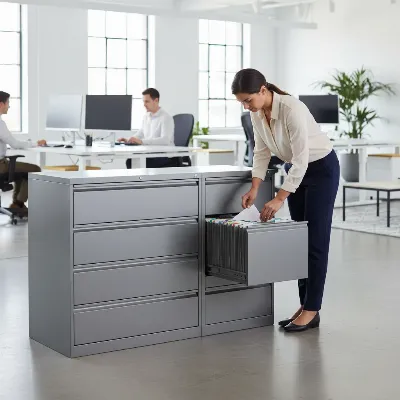 Durable metal lateral filing cabinet in a modern office space, emphasizing security and organization
Comparing Different Types of Lateral Filing Cabinets
Choosing the right lateral filing cabinet involves weighing various factors, including material, durability, cost, aesthetics, and security features. The following comparison table highlights the key differences to help you make an informed decision.
| Feature | Metal Filing Cabinets | Wood/Laminate Filing Cabinets | Mobile Filing Cabinets | Fireproof Filing Cabinets |
|---|---|---|---|---|
| Material | Steel, often heavy-gauge | Engineered wood, particle board with veneer | Various (metal, wood, laminate) with casters | Heavy-gauge steel with fire-resistant insulation |
| Durability | Very High, commercial-grade | Moderate to High, depending on construction | Moderate to High, depends on base material | Extremely High, built to withstand extreme conditions |
| Cost | Mid to High | Low to Mid | Mid | High |
| Aesthetics | Industrial, modern, functional | Classic, elegant, furniture-like | Modern, versatile, adaptable | Functional, often robust and less decorative |
| Security | High (robust locks, sturdy construction) | Moderate (standard locks) | Moderate (standard locks, may have locking wheels) | Very High (fire and impact resistance, robust locks) |
| Best For | High-traffic, commercial, industrial settings | Executive offices, reception areas, home offices | Flexible workspaces, personal use, collaborative zones | Storing vital, irreplaceable documents |
Guide to Choosing the Right Lateral Filing Cabinet (Buying Guide)
Selecting the ideal lateral filing cabinet for your wide office space requires careful consideration of several factors to ensure it meets your specific needs for organization, security, and aesthetics.
1. Determine Your Storage Needs
Begin by assessing the volume and type of documents you need to store. Consider whether you primarily handle letter-sized (8.5″ x 11″), legal-sized (8.5″ x 14″), or even A4 documents. Many lateral cabinets offer adjustable rails that can accommodate various file sizes, providing future-proof flexibility. Also, consider the frequency of access: high-volume, frequently accessed files benefit from easy-to-open, smooth-gliding drawers. Estimate how many drawers you will need, typically ranging from 2-drawer units for smaller collections to 6-drawer behemoths for extensive records.
2. Choose the Right Material
The material largely dictates the cabinet’s durability, appearance, and security level.
- Metal (Steel): Best for durability, security, and high-traffic commercial environments. It offers a professional, robust look and can withstand significant wear.
- Wood/Laminate: Ideal for a more refined, aesthetic appeal, suitable for executive offices or areas where decor is a priority. While less rugged than metal, they still offer practical storage.
- Fireproof: A non-negotiable choice for confidential or irreplaceable documents that require protection against fire and water damage.
3. Consider Size and Configuration
Lateral filing cabinets are known for their width, commonly ranging from 30″ to 42″. In wide office spaces, these wider units maximize storage efficiency along walls without encroaching too deeply into the room. Low-profile models (2-3 drawers) are excellent for maintaining open sightlines and can double as a surface for printers or decor. Taller models (4-6 drawers) offer maximum storage density for extensive filing requirements. Measure your available space meticulously, ensuring adequate room for both the cabinet itself and the full extension of its drawers.
4. Prioritize Security Features
For sensitive or confidential documents, security is paramount. Look for cabinets equipped with robust locking mechanisms, preferably a central lock that secures all drawers simultaneously. Some advanced options include electronic locks or individually locking drawers. Anti-tilt mechanisms are also crucial for safety, preventing the cabinet from tipping over when multiple drawers are open. Fire-resistant properties, though a higher investment, provide ultimate protection for critical records.
5. Evaluate Brand Reputation and Supplier
Invest in cabinets from reputable brands known for their quality construction and customer service. Brands like HON and Lorell are recognized for commercial-grade durability and reliable performance. Check warranty information and read reviews from other businesses to gauge product satisfaction and long-term reliability. A trusted supplier can also offer better support for delivery, assembly, and any potential issues.
6. Set Your Budget
Lateral filing cabinet prices vary widely based on material, size, features, and brand. Establish a realistic budget, but consider the cabinet an investment in your office’s long-term organization and efficiency. While more affordable laminate options exist, a higher upfront cost for a durable metal or fireproof cabinet can save money and provide better protection in the long run.
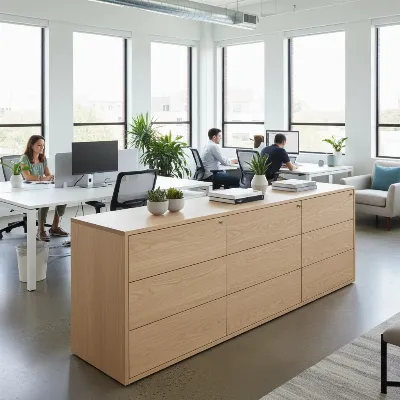 Spacious office with a well-chosen lateral filing cabinet, illustrating key buying guide considerations
Popular Lateral Filing Cabinet Models
The market offers a diverse range of lateral filing cabinets, each with unique features catering to different office aesthetics and functional demands. While specific model names can fluctuate, understanding popular types and their general characteristics will help in selecting an ideal choice.
-
Standard Metal Lateral Files (e.g., HON Basyx, Lorell SOHO): These are workhorse cabinets, typically 2-drawer to 5-drawer configurations, made from durable steel. They are favored for their commercial-grade construction, smooth drawer glides, and robust locking systems. Often available in classic black, gray, or putty finishes, they blend seamlessly into most professional environments and are prized for their reliability and long lifespan. They frequently feature adjustable hang rails for both letter and legal-sized documents.
-
Contemporary Design Lateral Files (e.g., Wayfair’s Ebern Designs, Audri models): Many manufacturers offer lateral cabinets that prioritize sleek design alongside functionality. These might feature engineered wood with modern finishes, clean lines, and integrated handles. Some models include both file drawers and open shelving for a mixed storage solution, suitable for offices aiming for a more aesthetic or hybrid decor. They are often chosen for their ability to complement diverse modern office styles.
-
Mobile Lateral Pedestals (e.g., Wade Logan Balpreet 3-Drawer Mobile File Cabinet): These compact, often 2 or 3-drawer units, are designed for mobility within the workspace. Equipped with locking casters, they provide flexible storage that can be moved as needed, making them excellent for collaborative areas or personal workstations. While smaller, they still offer lateral filing capabilities for letter or legal documents and often include a top surface for additional workspace or decor.
When evaluating popular models, consider the drawer capacity, the type of lock, the anti-tip mechanism, and the finish. Prioritize models that offer versatile filing options (e.g., side-to-side and front-to-back filing with conversion bars) and construction that supports the weight of your documents over time.
“A lateral filing cabinet is more than just storage; it’s a strategic investment in an organized, efficient, and aesthetically pleasing workspace. Its wider footprint allows for superior document management without compromising the open feel of a modern office.” – Dr. Eleanor Vance, Office Ergonomics & Design Specialist
Tips for Organizing and Maintaining Your Lateral Filing Cabinet
Maximizing the utility and lifespan of your lateral filing cabinet involves thoughtful organization and consistent maintenance.
Efficient Organization
- Categorize and Label: Implement a clear categorization system for your documents (e.g., by department, project, client, or alphabet). Use easily readable labels on each drawer and individual file folders. Color-coding can further enhance quick retrieval.
- Side-to-Side Filing: Take advantage of the lateral design by filing documents side-to-side. This allows for greater capacity and better visibility of file tabs compared to front-to-back vertical filing within the same drawer.
- Remove Obsolete Files: Periodically purge outdated or unnecessary documents. This prevents overcrowding and makes current files easier to find. Consider digital archiving for long-term, infrequently accessed records.
- Use Hanging Files and Inserts: Utilize hanging file folders to keep documents neatly suspended and prevent slumping. Drawer dividers and smaller inserts can organize office supplies or smaller documents within the broader drawers.
- Even Weight Distribution: Distribute files evenly across drawers to prevent stress on drawer mechanisms and maintain cabinet stability. Avoid overloading any single drawer.
Proper Maintenance
- Regular Cleaning: Dust the exterior of your cabinet regularly with a soft, damp cloth. For metal cabinets, a mild all-purpose cleaner can be used. For wood or laminate, follow the manufacturer’s cleaning recommendations to avoid damaging the finish.
- Lubricate Moving Parts: Periodically apply a silicone-based lubricant to drawer glides and locking mechanisms (if they feel stiff) to ensure smooth operation. Avoid oil-based lubricants as they can attract dust.
- Check Locks and Hardware: Regularly inspect locks for functionality and ensure all screws and hardware are tight. Loose components can compromise security and drawer stability.
- Address Issues Promptly: If a drawer becomes difficult to open or close, or if the lock jams, address the issue immediately. Attempting to force a jammed drawer can cause further damage. Consult the manufacturer’s guide or a professional if needed.
- Protect from Moisture and Sunlight: Position cabinets away from direct sunlight to prevent fading of finishes, especially for wood or laminate. Protect from excessive moisture to prevent rust (metal) or warping (wood).
Pricing of Lateral Filing Cabinets on the Market
The price of lateral filing cabinets can vary significantly, reflecting differences in materials, size, features, brand reputation, and overall construction quality. Understanding these factors can help businesses budget effectively for their office storage needs.
Price Segments
- Economy/Entry-Level (Under $200-$300): These are typically smaller units, often 2-drawer, made from lighter-gauge metal or laminate. They are suitable for home offices or light-duty commercial use where budget is a primary concern. Security features might be basic, and durability could be moderate.
- Mid-Range ($300-$800): This segment offers a wider variety of options, including 2- to 4-drawer metal cabinets with commercial-grade construction, smoother drawer glides, and more robust locking mechanisms. Wood veneer or higher-quality laminate cabinets also fall into this range, providing a balance of aesthetics and functionality for small to medium-sized businesses.
- Premium/High-End ($800+): These cabinets include larger configurations (4-6 drawers), heavy-duty steel construction, advanced security features (e.g., fire resistance, electronic locks), and high-quality finishes. Cabinets from top-tier brands like HON often occupy this segment, offering superior durability, long warranties, and a professional aesthetic for large corporations, government offices, or specialized industries.
Factors Influencing Price
- Material: Steel cabinets are generally more expensive than laminate or engineered wood due to their durability and commercial-grade suitability. Fireproof cabinets, with their specialized insulation and construction, command the highest prices.
- Size and Number of Drawers: Larger cabinets with more drawers naturally cost more due to increased material and manufacturing complexity. A 4-drawer lateral file will be more expensive than a 2-drawer unit from the same series.
- Features: Additional features such as advanced locking systems, anti-tilt mechanisms, heavy-duty drawer glides, adjustable rails for multiple file sizes, and specialized finishes contribute to a higher price point. Mobile cabinets with quality casters also tend to be slightly pricier.
- Brand and Reputation: Established brands known for quality and reliability, such as HON or Lorell, often have higher price tags but offer greater assurance of durability and customer support.
- Supplier: Prices can also vary between different retailers and office supply companies, with some offering bulk discounts or special promotions.
When comparing prices, it’s crucial to look beyond the initial cost and consider the long-term value, durability, and security features that align with your office’s specific demands.
Conclusion
For wide office spaces, lateral filing cabinets are an indispensable asset, offering a superior blend of capacity, accessibility, and aesthetic integration. Their broad design maximizes storage along walls, maintains open sightlines, and supports efficient document management in high-traffic environments. From robust metal units ideal for heavy commercial use to elegant wood options that enhance executive suites, there’s a lateral filing solution to fit every need and decor. By carefully considering your storage volume, desired security, and available space, you can select a cabinet that not only organizes your documents but also elevates the overall functionality and appearance of your workspace.
Ready to transform your office organization? Explore the diverse range of lateral filing cabinets today and discover how the right storage solution can boost your team’s productivity and maintain a clutter-free environment. How might an upgraded filing system unlock new levels of efficiency in your daily operations?
Frequently Asked Questions
What is the main advantage of a lateral filing cabinet over a vertical one for a wide office?
The main advantage is its width and shallow depth, allowing for side-to-side filing and higher storage capacity while occupying less floor space deep into the room. This design is excellent for maintaining open sightlines and providing easy access in wide, open office layouts.
Can lateral filing cabinets accommodate different file sizes?
Yes, most modern lateral filing cabinets are highly versatile. They typically come with adjustable hanging rails that can be configured to hold letter-sized, legal-sized, and sometimes even A4-sized documents, offering flexibility for evolving filing needs.
Are lateral filing cabinets secure enough for confidential documents?
Many lateral filing cabinets feature robust locking mechanisms, often a central lock that secures all drawers. For highly confidential documents, specific fireproof lateral cabinets offer enhanced security, protecting contents from both unauthorized access and environmental hazards like fire.
How many drawers do lateral filing cabinets usually have?
Lateral filing cabinets are available in various configurations, commonly ranging from 2-drawer units for smaller storage needs up to 6-drawer cabinets for extensive document collections. The choice depends on the volume of documents and the available vertical space.
Can I place heavy office equipment like a printer on top of a lateral filing cabinet?
Yes, one of the benefits of lateral filing cabinets, particularly those made of sturdy metal, is their wide and flat top surface. This provides additional usable space, making them suitable for holding printers, office supplies, or decorative items, further optimizing your workspace.
How do I maintain the smooth operation of my lateral filing cabinet drawers?
To ensure smooth operation, regularly clean the drawer glides and apply a silicone-based lubricant if they become stiff. Avoid overloading drawers, and periodically check that all hardware is tight. Addressing any issues promptly will help maintain the cabinet’s functionality.
What is the typical width range for lateral filing cabinets?
Lateral Filing Cabinets generally range from 30 inches to 42 inches in width. This wide design is specifically what makes them so efficient for organizing a large volume of documents across a broad wall space in wide office environments.