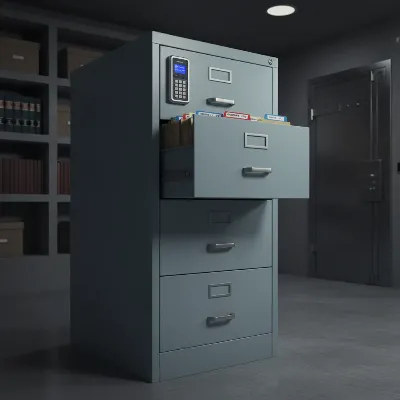
In an increasingly digital world, the need to physically secure sensitive documents often gets overlooked. Yet, critical records—from financial statements and legal contracts to personal identification and confidential client information—still exist in paper form, demanding robust protection against unauthorized access, theft, and environmental damage. A lockable filing cabinet is not merely a piece of office furniture; it’s a fundamental investment in data security and peace of mind. This comprehensive guide will explore the various types, features, and considerations for choosing the perfect lockable filing cabinet to safeguard your most valuable paperwork.
What is a Lockable Filing Cabinet?
A lockable filing cabinet is a specialized storage unit designed to organize and protect physical documents. Unlike standard cabinets, these units incorporate built-in locking mechanisms to restrict access, making them essential for maintaining confidentiality and preventing theft. Modern lockable filing cabinets have evolved significantly from basic metal boxes, now offering advanced security features, enhanced durability, and protection against hazards like fire and water. They serve as a critical component in both home and professional environments where sensitive information must be kept secure.
Types of Lockable Filing Cabinets
The world of lockable filing cabinets offers a variety of designs, each suited for different needs and spaces. Understanding these types is the first step in selecting the right security solution for your documents.
Vertical Filing Cabinets
|
Our Picks for the Best Filing Cabinet in 2026
As an Amazon Associate I earn from qualifying purchases.
|
||
| Num | Product | Action |
|---|---|---|
| 1 | VASAGLE 2 Drawers File Cabinet with Lock, Printer Stand, Office Filing Cabinet Organizer, for A4 and Letter Size Documents, Ink Black UOFC061B16 |

|
| 2 | Lorell NuSparc 3 Drawer Locking Filing Cabinet | Pre-Assembled Steel Construction | Space-Saving Design is Perfect for Home and Small Office | Letter-Size | Assembled in North America |
|
| 3 | VASAGLE 2-Drawer File Cabinet, Small Rolling Filing Cabinet for Home Office, Printer Stand, for A4, Letter-Size Documents, 15.7 x 16.5 x 27.6 Inches, Snow White UOFC040W46 |
|
| 4 | VASAGLE 2-Drawer File Cabinet, Small Rolling Filing Cabinet for Home Office, Printer Stand, for A4, Letter-Size Documents, 15.7 x 16.5 x 27.6 Inches, Ink Black UOFC040B16 |
|
| 5 | Letaya 3 Drawer Mobile File Cabinet with Lock,Under Desk Metal Filing Cabinets for Home Office Organizer Letters/Legal/A4((Fully Assembled-Black) |
|
| 6 | HOOBRO 2 Drawer File Cabinet with Lock, Under Desk Mobile Filing Cabinet for Home Office, Wooden Farmhouse Office Storage Cabinet, Printer Stand Fits Letter and A4 Size, Walnut and White WH66WJ01 |
|
| 7 | 2 Drawer Locking Filing Cabinet | Pre-Assembled Steel Construction | Space-Saving Design is Perfect for Home and Small Office | Letter-Size | Assembled in North America |
|
| 8 | 3 Drawer Tall File Cabinet with Wheels, Farmhouse Vertical Filing Cabinet Fits Letter/A4 Size, Rolling File Cabinets Wooden Printer Stand for Home Office, Rustic White |
|
| 9 | 3 Drawer Small File Cabinet with Wheels, Farmhouse Vertical Filing Cabinet Fits Letter/A4 Size, Rolling File Cabinets Wooden Printer Stand for Home Office, Rustic White |
|
| 10 | 2 Drawer Small File Cabinet with Lock, Farmhouse Vertical Filing Cabinet Fits Letter and A4 Size, Under Desk Wooden File Cabinets for Home Office, Printer Stand, Rustic White |
|
Vertical filing cabinets are the most traditional type, featuring drawers that extend from the shorter side of the cabinet. Files are typically stored facing front-to-back, making them ideal for letter- or legal-sized documents. Their compact footprint makes them suitable for smaller offices or personal use where floor space is limited. Most come with a single lock that secures all drawers.
Lateral Filing Cabinets
Lateral filing cabinets are wider than they are deep, with drawers that extend from the longer side. Files are usually stored side-to-side, which can accommodate a greater volume of documents, including larger formats. Their broad design often allows them to fit neatly against walls or under windows, offering a streamlined appearance while maximizing storage capacity. Many lateral cabinets feature anti-tip mechanisms for safety, preventing them from toppling over when multiple heavy drawers are extended.
Mobile Filing Cabinets
Mobile filing cabinets are designed with casters or wheels, allowing for easy relocation within an office or home. These cabinets are perfect for dynamic workspaces where documents need to be moved frequently or for personal use as under-desk storage. For security, ensure the casters have a locking mechanism to keep the cabinet stationary when needed. While offering convenience, their mobility can sometimes be a security concern if not properly secured, making robust locks even more critical.
Fireproof Filing Cabinets
When protection against environmental disasters is paramount, fireproof filing cabinets are indispensable. These cabinets are constructed with fire-resistant insulation materials, such as gypsum or ceramic compounds, between layers of metal to shield documents from extreme heat. Many fireproof cabinets also offer water resistance, protecting against sprinkler systems or fire hoses. They are tested and certified with UL ratings (Underwriters Laboratories), indicating how long the internal temperature will remain below a critical threshold (e.g., Class 350 for paper, Class 125 for digital media) during a fire.
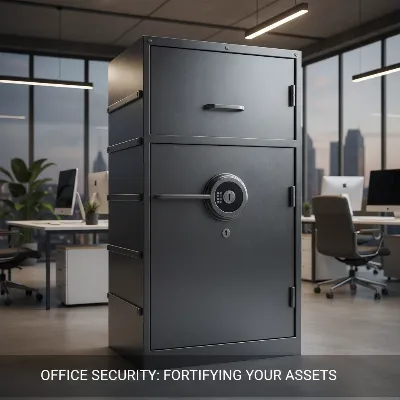 A robust fireproof filing cabinet in a modern office, closed and locked, indicating superior document protection against fire.
High-Security Filing Cabinets
For truly sensitive or irreplaceable documents, high-security filing cabinets offer unmatched protection. These units are often constructed from solid, thicker-gauge steel with reinforced locking bars and bolt-down capabilities to prevent forced entry or removal (search 1). They may feature advanced electronic or biometric locks and are designed to resist tampering, drilling, and other forms of physical attack. Ideal for legal, financial, healthcare, or corporate environments, these cabinets prioritize physical integrity and advanced access control.
Comparing Lockable Filing Cabinet Materials
The material of your filing cabinet significantly impacts its durability, aesthetic appeal, and, most importantly, its security level.
Steel Cabinets
Steel is the most common and recommended material for secure filing cabinets. Its inherent strength and durability provide robust protection against forced entry. The thickness of the steel, measured in gauge (a lower gauge number indicates thicker steel), directly correlates with its resistance to physical attacks (search 3). Steel cabinets are often chosen for their longevity and can be further enhanced with fireproof insulation and reinforced locking mechanisms.
Wood and Laminate Cabinets
Wood and laminate cabinets offer a more traditional or aesthetically pleasing appearance, often preferred in executive offices or home settings for their warmth and style. While they can include locking mechanisms, they generally provide a lower level of security compared to steel. They are more susceptible to damage from forced entry, fire, and moisture. For highly sensitive documents, wood or laminate cabinets might not offer sufficient protection unless they are specifically designed with hidden steel reinforcements and fire-resistant liners.
Here’s a comparison table summarizing the common materials:
| Feature | Steel Filing Cabinet | Wood/Laminate Filing Cabinet |
|---|---|---|
| Durability | High; resistant to dents, scratches, and heavy use. | Moderate; prone to scratches and water damage. |
| Security | High; robust against forced entry, can be fireproof. | Low to moderate; easier to compromise. |
| Aesthetics | Modern, industrial, professional; various finishes. | Traditional, warm, elegant; limited finishes. |
| Weight | Heavy, especially high-security models. | Lighter, easier to move (without contents). |
| Cost | Mid-range to high, depending on security features. | Mid-range to high, depending on wood quality. |
Essential Security Features in Lockable Filing Cabinets (Buying Guide)
Choosing the best lockable filing cabinet involves looking beyond just the number of drawers. Critical security features can make all the difference in protecting your documents.
Advanced Locking Mechanisms
The heart of any secure filing cabinet is its locking system. Different mechanisms offer varying levels of protection and convenience:
- Keyed Locks: These are the most common, including cam locks (a cylinder lock requiring a key to rotate an internal cam) and tumbler locks (using pins that align with a key to unlock) (search 2). While straightforward, standard keyed locks can be vulnerable to picking, and keys can be lost, duplicated easily, or stamped with numbers that identify the key type (search 3). High-security keyed locks, like UL-listed Medeco, offer greater pick resistance.
- Combination Locks: These keyless systems require a numerical code to open. They eliminate the risk of lost keys but demand careful code management, including regular changes and restricted sharing (search 3).
- Electronic/Digital Locks: Providing a higher level of security and convenience, these use PIN codes, swipe cards, or even biometric access (fingerprint scanning) (search 2). Digital locks allow for easier access management and can sometimes provide an audit trail of who accessed the cabinet and when. However, they require power and occasional maintenance (search 3).
- Central Locking Systems: Many cabinets feature a single lock that secures all drawers simultaneously, offering convenience. More advanced models might allow for independent locking of each drawer for granular control.
- Reinforced Locking Bars: Found in high-security cabinets, these solid steel bars extend across the drawer openings, significantly deterring prying and forced entry (search 1).
Construction and Durability
The physical integrity of the cabinet is as vital as its lock. Look for:
- Thick-Gauge Steel: As mentioned, thicker steel (lower gauge number) provides superior resistance to drilling and cutting attempts (search 3).
- Anti-Pry Design: Features like flush-front drawers, internal hinges, and minimal gaps around drawers make it harder for tools to gain leverage.
- Bolt-Down Capability: High-security cabinets can often be anchored to the floor or wall, preventing thieves from carrying away the entire cabinet (search 3).
Environmental Protection
Beyond theft, documents are vulnerable to fire and water damage:
- Fire Resistance: Certified fireproof cabinets (UL 72 Class 350, 150, or 125) are crucial for irreplaceable paper documents and digital media (search 1, search 2). These ratings specify the duration (e.g., 1-hour, 2-hour) and internal temperature limits the cabinet can withstand.
- Water Resistance: Some fireproof cabinets incorporate water-resistant gaskets, drip seals, or moisture barriers to protect contents from water damage caused by sprinklers or fire hoses (search 1).
- Impact Resistance: Critical for multi-story buildings, impact-rated cabinets (e.g., UL 30-ft Impact Rating) are designed to withstand drops if a building collapses during a fire (search 1).
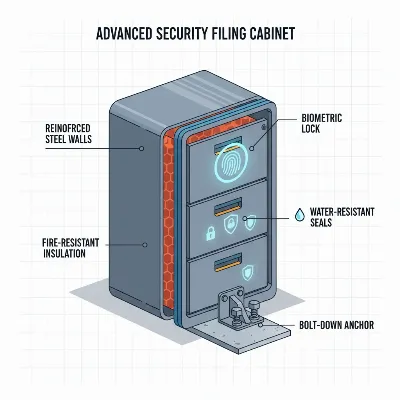 An illustrative infographic highlighting key security features of a lockable filing cabinet, including advanced lock, steel construction, and fire/water resistance.
Anti-Tip Mechanisms & Drawer Stops
While primarily safety features, these also contribute indirectly to security by making the cabinet more stable and less prone to accidental exposure of contents. An anti-tip mechanism prevents the cabinet from falling forward when multiple heavy drawers are open (search 2). Drawer stops prevent drawers from being fully extended, maintaining stability.
How to Choose the Right Lockable Filing Cabinet
Selecting the perfect lockable filing cabinet for your needs requires a thoughtful evaluation of several factors.
1. Assess Your Needs and Risks
Start by identifying what you need to protect.
- Document Sensitivity: Are you storing general office files, HR records, financial statements, legal documents, or highly confidential client data? The higher the sensitivity, the greater the need for robust security features.
- Volume of Documents: How many files do you have now, and how many do you anticipate in the future? This determines the required capacity and number of drawers.
- Space Availability: Measure your available floor space and consider the cabinet’s dimensions (height, width, depth) to ensure it fits comfortably without impeding movement or blocking other furniture (search 2).
- Environmental Risks: Is your location prone to fire, flooding, or high humidity? This will guide your decision on fireproof and water-resistant features.
2. Material Selection
For maximum security, steel cabinets are generally the superior choice due to their durability and resistance to forced entry (search 2). For less sensitive documents or where aesthetics are a primary concern, wood or laminate cabinets with adequate locking mechanisms might suffice, though often at a lower security level.
3. Size and Capacity
Filing cabinets come in various sizes and drawer configurations.
- File Size: Ensure the drawers accommodate your standard document sizes (letter, legal, or both).
- Drawer Count: Common configurations include 2, 3, 4, or 5 drawers. Consider your current and future storage needs to avoid quickly outgrowing your cabinet.
- Drawer Type: Vertical (front-to-back filing) or lateral (side-to-side filing) will depend on your preference and space. Lateral drawers often hold more per drawer.
4. Certification and Ratings
For fireproof cabinets, look for UL (Underwriters Laboratories) Standard 72 certification, which specifies the duration and maximum internal temperature a cabinet can withstand in a fire (search 1). For digital media, look for UL Class 125 ratings. These certifications provide independent verification of a product’s performance.
5. Budget
Lockable filing cabinets range widely in price, from budget-friendly options for basic security to high-end, certified fireproof and high-security units. Balance your budget with your security requirements; investing more in a robust cabinet can save you significant costs and distress in the long run by preventing data breaches or loss.
6. Brand Reputation
Consider reputable manufacturers known for producing high-quality security products. Brands like FireKing, Lorell, DEVAISE, and ArmorStor often receive positive reviews for durability and security features (search 1).
Best Practices for Maximizing Security and Organization
Even the best lockable filing cabinet needs proper practices to ensure optimal security and efficiency.
- Strategic Placement: Position your filing cabinet in a secure area of your office, away from public view, windows, or high-traffic zones where unauthorized individuals might have easy access (search 3).
- Strict Access Control: Limit access to keys, combination codes, or digital credentials to only authorized personnel. Maintain a log of who has access and periodically review this list to remove access for those who no longer require it (search 3).
- Secure Key and Code Management: Store physical keys in a separate, secure location (e.g., a locked key box). For combination or digital locks, avoid obvious codes and change them regularly, especially if an employee with access leaves the company (search 3).
- Consistent Locking: Always lock your cabinet, even if you’re only stepping away for a few minutes. Short lapses can create opportunities for unauthorized access or theft (search 3).
- Anchoring Cabinets: For an additional layer of security, especially with high-value contents, consider anchoring your filing cabinet to the floor or wall. This prevents the entire unit from being removed (search 3).
- Organized Filing System: A well-organized cabinet, with clearly labeled folders and an intuitive indexing system, not only makes finding documents easier but also minimizes the time drawers need to be open, reducing exposure.
Price of Lockable Filing Cabinets on the Market
The price of lockable filing cabinets varies significantly based on several factors, including material, size, security features, and brand.
- Budget-Friendly ($100 – $300): These typically include basic metal or laminate cabinets with simple cam locks. They are suitable for general document storage where moderate security is sufficient for home offices or small businesses.
- Mid-Range ($300 – $800): This category often features sturdier steel cabinets, more robust keyed locks, or basic electronic locks. You’ll find a wider range of sizes (e.g., 3-4 drawer lateral cabinets) and some entry-level fire-resistant options.
- High-End ($800 – $3000+): At this level, you’re investing in premium security. These cabinets are typically constructed from thick-gauge steel, offer advanced electronic or biometric locks, and come with certified fire, water, and impact resistance (e.g., UL 1-hour or 2-hour Class 350 ratings). High-security cabinets with reinforced locking bars and bolt-down capabilities also fall into this range, designed for legal, medical, or financial institutions requiring the highest level of protection.
Factors like the number of drawers, the type of locking mechanism (biometric versus standard key), fire/water ratings, and the overall construction quality (e.g., gauge of steel) directly influence the final price. Considering the value of the documents you’re protecting, the cost of a high-quality lockable filing cabinet is often a worthwhile investment in safeguarding your assets and ensuring compliance.
Conclusion
In an era where data security is paramount, lockable filing cabinets remain an indispensable tool for protecting your most sensitive physical documents. From deterring theft and unauthorized access to safeguarding against fire and water damage, a well-chosen cabinet provides robust protection and invaluable peace of mind. By carefully considering the type, material, and advanced security features—such as robust locking mechanisms, durable construction, and environmental certifications—you can select a storage solution that meets your specific needs. Implementing best practices for placement and access control further enhances this security, ensuring your critical information is always safeguarded.
What level of document security does your current filing system truly provide, and what steps will you take to enhance it?
Câu Hỏi Thường Gặp
Are all metal filing cabinets fireproof?
No, not all metal filing cabinets are fireproof. Only those specifically designed with fire-resistant insulation and certified with a UL (Underwriters Laboratories) fireproof rating are designed to withstand high temperatures and protect sensitive documents during a fire. Regular metal cabinets offer minimal fire protection.
What is a UL Class 350 rating?
A UL Class 350 rating means that a filing cabinet or safe can maintain an internal temperature below 350°F (177°C) when exposed to external temperatures of up to 1700°F (927°C) for a specified duration, usually 1 or 2 hours. This rating is crucial for protecting paper documents from combustion and damage in a fire.
Can I use a regular padlock on a filing cabinet?
While you can use a regular padlock with a filing cabinet that has a hasp or slidebar, standard padlocks often offer very low security and can be easily bypassed. For enhanced protection, especially for sensitive documents, it is recommended to use high-security padlocks or integrated locking mechanisms provided by the cabinet manufacturer.
How often should I change the lock code on an electronic filing cabinet?
The frequency for changing the lock code on an electronic filing cabinet depends on the sensitivity of the documents, the number of people with access, and your organization’s security policies. It’s a good practice to change codes annually, whenever an employee with access leaves, or if there’s any suspicion of compromise, to maintain optimal security.
What’s the difference between vertical and lateral lockable filing cabinets?
Vertical lockable filing cabinets are deeper than they are wide, with drawers that open from the shorter side, storing files front-to-back. Lateral lockable Filing Cabinets are wider than they are deep, with drawers that open from the longer side, storing files side-to-side. Lateral cabinets generally offer more storage capacity per drawer and often fit better in wider spaces.