In today’s ever-evolving workspace, the humble filing cabinet remains a critical piece of office furniture, even with the rise of digital solutions. While much information now resides in the cloud, physical documents like legal papers, client contracts, and financial records still demand secure, organized storage. Choosing the right filing cabinet is not just about stowing papers away; it’s about safeguarding vital information, optimizing space, and ensuring seamless workflow. But with so many options available, particularly between traditional wood and robust metal, how do you decide which one best suits your needs in 2026? This comprehensive guide delves into the characteristics, advantages, and disadvantages of both metal and wood filing cabinets, helping you make an informed decision for your office.
What is a Filing Cabinet?
A filing cabinet is essentially a piece of office furniture designed with drawers or compartments specifically structured for organizing and storing paper documents. Its primary purpose is to provide a systematic and secure repository for hard copies, keeping them accessible yet protected. Beyond mere storage, a good filing cabinet contributes significantly to an organized, efficient, and professional workspace by minimizing clutter and ensuring quick retrieval of important information.
Filing cabinets come in various forms, primarily categorized by their material, size, and function. Common materials include metal (often steel or aluminum), wood (solid wood, veneer, or laminate), and sometimes plastic. Functionally, they can be vertical, lateral, mobile, or even specialized as fireproof units, each offering distinct benefits to cater to different office layouts and document management needs.
Popular Types of Filing Cabinets
When considering a filing cabinet, the material is often the first distinguishing factor, heavily influencing its durability, aesthetic, and functionality. Each material presents a unique set of pros and cons, making certain types more suitable for specific environments or requirements.
Metal Filing Cabinets
Metal filing cabinets, predominantly made from steel, are workhorses of the office world. They are engineered for demanding environments where strength, security, and longevity are paramount. Steel cabinets typically feature a powder-coated or baked-on enamel finish, enhancing their resistance to wear.
- Advantages:
- Superior Durability: Metal, especially steel, is exceptionally robust, resisting warping, sagging, and general wear and tear for decades.
- High Load Capacity: Steel drawers are designed to handle significant weight, often supporting 150-200 pounds per drawer, making them ideal for heavy archives or legal documents.
- Enhanced Security: Metal cabinets readily integrate robust, commercial-grade locking systems, and the material itself acts as a strong physical deterrent against unauthorized access.
- Fire Resistance: Many steel cabinets offer UL (Underwriters Laboratories) Classified fire ratings, providing critical protection for documents against heat and flames.
- Impact and Scratch Resistance: High-quality finishes make them highly resistant to scratches and scuffs, though sharp impacts can cause dents.
- Cost-Effectiveness Over Time: Despite potentially higher upfront costs for premium models, their long lifespan reduces the need for frequent replacements.
- Disadvantages:
- Aesthetics: Often perceived as purely functional, they can sometimes lack the warmth and decorative appeal of wood, coming in more industrial or utilitarian colors.
- Dent Susceptibility: While resistant to scratches, thinner-gauge steel can dent from sharp impacts, which are typically permanent.
- Weight: Can be heavy, though often lighter than solid wood, making moving a factor to consider.
- Applications: High-traffic corporate offices, industrial settings, medical facilities, legal firms, accounting departments, or any environment requiring maximum security and document protection.
|
Our Picks for the Best Filing Cabinet in 2026
As an Amazon Associate I earn from qualifying purchases.
|
||
| Num | Product | Action |
|---|---|---|
| 1 | VASAGLE 2-Drawer File Cabinet, Small Rolling Filing Cabinet for Home Office, Printer Stand, for A4, Letter-Size Documents, 15.7 x 16.5 x 27.6 Inches, Ink Black UOFC040B16 |

|
| 2 | VASAGLE 2-Drawer File Cabinet, Small Rolling Filing Cabinet for Home Office, Printer Stand, for A4, Letter-Size Documents, 15.7 x 16.5 x 27.6 Inches, Snow White UOFC040W46 |
|
| 3 | Letaya 3 Drawer Mobile File Cabinet with Lock,Under Desk Metal Filing Cabinets for Home Office Organizer Letters/Legal/A4((Fully Assembled-Black) |
|
| 4 | VASAGLE 2 Drawers File Cabinet with Lock, Printer Stand, Office Filing Cabinet Organizer, for A4 and Letter Size Documents, Ink Black UOFC061B16 |
|
| 5 | Lorell NuSparc 3 Drawer Locking Filing Cabinet | Pre-Assembled Steel Construction | Space-Saving Design is Perfect for Home and Small Office | Letter-Size | Assembled in North America |
|
| 6 | 2 Drawer Locking Filing Cabinet | Pre-Assembled Steel Construction | Space-Saving Design is Perfect for Home and Small Office | Letter-Size | Assembled in North America |
|
| 7 | 3 Drawer Tall File Cabinet with Wheels, Farmhouse Vertical Filing Cabinet Fits Letter/A4 Size, Rolling File Cabinets Wooden Printer Stand for Home Office, Rustic White |
|
| 8 | 3 Drawer Small File Cabinet with Wheels, Farmhouse Vertical Filing Cabinet Fits Letter/A4 Size, Rolling File Cabinets Wooden Printer Stand for Home Office, Rustic White |
|
| 9 | HOOBRO 2 Drawer File Cabinet with Lock, Under Desk Mobile Filing Cabinet for Home Office, Wooden Farmhouse Office Storage Cabinet, Printer Stand Fits Letter and A4 Size, Walnut and White WH66WJ01 |
|
| 10 | 2 Drawer Small File Cabinet with Lock, Farmhouse Vertical Filing Cabinet Fits Letter and A4 Size, Under Desk Wooden File Cabinets for Home Office, Printer Stand, Rustic White |
|
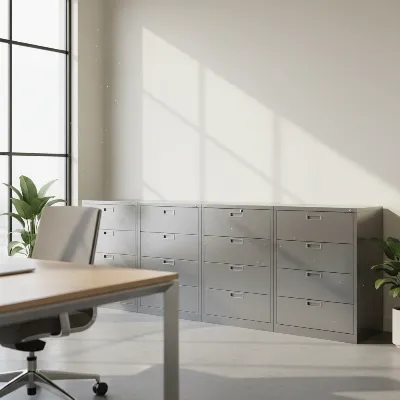 Modern metal filing cabinets in a sleek, minimalist office setting, showcasing durability and functionality.(https://vertexaisearch.cloud.google.com/grounding-api-redirect/AUZIYQEQ-o9jJ9107n-rK0Nl8uD94V4uM430y0S8w48w83818318)
Wood Filing Cabinets
Wood filing cabinets offer a distinct aesthetic, bringing warmth, classic elegance, and a more furniture-like appearance to an office space. They are available in various types, including solid hardwood, wood veneer over composite materials (like MDF or particleboard), and laminate finishes.
- Advantages:
- Aesthetic Appeal: Wood provides a traditional, professional, and sophisticated look, blending seamlessly into executive offices, home offices, or reception areas.
- Design Versatility: Available in a wide array of finishes, stains, and styles (e.g., oak, cherry, maple), offering flexibility to match diverse interior decors.
- Repairability: Minor scratches on solid wood can often be sanded and refinished, allowing the cabinet to maintain its appearance over time.
- Timelessness: A well-crafted wooden cabinet can remain aesthetically relevant for many years, often increasing in perceived value as a piece of furniture.
- Disadvantages:
- Lesser Durability (compared to steel): While solid hardwood is strong, wood can be more susceptible to scratches, dents, warping, or moisture damage than steel. Veneered or laminate options are even less durable.
- Lower Load Capacity: Wooden drawers, especially those not made from solid hardwood, may not support heavy loads as effectively as steel, potentially leading to warping or loosening if consistently overloaded.
- Reduced Security: While most wood cabinets offer locks, the material itself is less resistant to forced entry than thick-gauge steel, offering more privacy than absolute security.
- No Fire Resistance: Wood is combustible and offers virtually no protection against fire, making it unsuitable for storing highly sensitive or irreplaceable documents.
- Maintenance: May require more diligent care to preserve its finish and prevent wear.
- Applications: Executive suites, home offices, traditional office environments, spaces where aesthetics and a warm, inviting atmosphere are prioritized.
Plastic Filing Cabinets
Plastic filing cabinets are typically the most budget-friendly and lightweight option. While they offer portability and resistance to moisture, they generally fall short in terms of durability and security compared to metal or wood. They are best suited for light-duty, temporary storage or situations where cost is the absolute primary concern and document sensitivity is low.
Mobile Filing Cabinets
Mobile filing cabinets, often made of metal or laminate, are designed with caster wheels for easy movement. These are ideal for dynamic workspaces, collaborative environments, or home offices where flexibility in layout is desired. They usually come in smaller, pedestal-style configurations and offer convenience for users who need to bring their files closer to their workspace or rearrange their office frequently.
Comparing Metal and Wood Filing Cabinets
When pitting metal against wood, the choice often boils down to a trade-off between uncompromising functionality and classic aesthetics. Here’s a detailed comparison to highlight their differences across key criteria:
| Feature | Metal Filing Cabinets | Wood Filing Cabinets |
|---|---|---|
| Material | Steel, Aluminum | Solid Wood, Veneer over Composite, Laminate |
| Durability | High; resistant to impact (though can dent), fire, scratches. | Moderate to High (Solid Wood); Susceptible to scratches, warping, moisture. |
| Load Capacity | Very High (150-200 lbs/drawer for steel) | Moderate (Solid Wood), Lower (Veneer/Laminate); Prone to warping if overloaded. |
| Security | Excellent; strong integrated locks, physical deterrent, fire-rated options. | Good (for privacy); typically weaker locks, less resistant to forced entry, no fire resistance. |
| Aesthetics | Functional, modern, industrial, sleek; limited color palette. | Traditional, warm, elegant, furniture-like; wide range of finishes and styles. |
| Maintenance | Low; easy to clean, simple mechanics; dents are permanent. | Moderate; requires more care, scratches can be refinished. |
| Cost | Varies; can be more expensive upfront for high-security/fireproof, but cost-effective long-term. | Varies; solid wood can be very expensive upfront, laminate is cheaper. |
| Weight | Generally heavy, but often lighter than solid wood. | Can be very heavy (solid wood), lighter for laminate/veneer. |
| Environmental | Often made from recycled steel, recyclable. | Sustainable if sourced from certified forests; concerns with composite materials. |
> “The decision between metal and wood often mirrors a company’s culture. Businesses prioritizing robust security and sheer volume capacity often gravitate towards steel, while those aiming for an inviting, executive aesthetic might prefer the timeless appeal of wood.” – John D. Sterling, Office Furniture Consultant
How to Choose the Right Filing Cabinet (Buying Guide)
Selecting the ideal filing cabinet for your office requires careful consideration of several factors, ensuring it meets your practical needs, security requirements, and aesthetic preferences.
1. Identify Your Storage Needs
Start by assessing the volume and type of documents you need to store.
- Document Volume: Do you have a few essential papers or vast archives? This dictates the number of drawers and capacity required (e.g., 2-drawer, 4-drawer, or larger lateral cabinets).
- Document Size: Most cabinets accommodate letter-size (8.5″ x 11″) and legal-size (8.5″ x 14″) documents. Ensure your chosen cabinet supports the largest size you frequently use.
- Frequency of Access: For frequently accessed files, consider lateral cabinets or mobile units that offer easier retrieval.
2. Choose the Right Material
Your choice of material heavily impacts durability, security, and appearance.
- Metal (Steel/Aluminum): Opt for metal if durability, maximum security, fire protection, and high load capacity are critical. Ideal for high-traffic areas or confidential documents.
- Wood (Solid/Veneer/Laminate): Choose wood for a classic, professional, and warm aesthetic. Suitable for executive offices or home offices where appearance is a priority, and security needs are moderate.
- Laminate/Plastic: Consider these for budget-friendly, lightweight options for light-duty storage or when flexibility is more important than extreme durability or security.
3. Consider Size and Style
The dimensions and design of the cabinet must fit your available space and office decor.
- Vertical Filing Cabinets: Taller and narrower, saving floor space, ideal for smaller offices.
- Lateral Filing Cabinets: Wider and shallower, offering more filing capacity per drawer and often a larger work surface on top. Best for larger offices or shared spaces.
- Mobile Cabinets: Small, often 2-drawer units on wheels, perfect for under-desk storage and flexibility.
- Aesthetics: Select a style and finish that complements your existing office furniture and overall decor. Metal cabinets come in various colors like black, grey, white, or silver, while wood offers natural tones and finishes.
4. Prioritize Security Features
For sensitive or confidential documents, security is non-negotiable.
- Locking Mechanisms: Look for cabinets with central key locks, combination locks, or electronic keypads.
- Fire/Water Resistance: For critical documents, invest in fire-rated steel cabinets that can protect contents from extreme temperatures. While more expensive, this offers invaluable peace of mind.
- Anti-Tilt Mechanisms: Essential for stability, especially in vertical cabinets, preventing more than one drawer from opening at a time and reducing tipping risks.
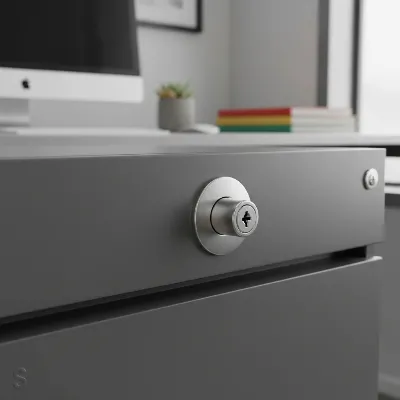 A secure, modern metal filing cabinet with a robust locking mechanism in a professional office.(https://vertexaisearch.cloud.google.com/grounding-api-redirect/AUZIYQEQ-o9jJ9107n-rK0Nl8uD94V4uM430y0S8w48w83818318)
5. Research Brands and Suppliers
Choose reputable manufacturers known for quality construction, good warranties, and customer service. Reading reviews can provide insights into a product’s real-world performance and durability.
6. Set a Budget
Filing cabinet prices vary significantly. Establish a budget, but remember that investing in a higher-quality cabinet (especially steel for critical documents) can be more cost-effective in the long run due to its durability and longevity.
Popular Filing Cabinet Models
The market offers a vast array of filing cabinets, but certain designs consistently rank as popular choices due to their blend of functionality, durability, and style.
- Standard Steel Vertical Cabinets: These remain a staple for high-volume filing in corporate environments. Available typically in 2, 3, 4, or 5-drawer configurations, they maximize vertical space. Brands like HON and Steelcase are well-regarded for their robust construction, smooth drawer operation, and integrated locking systems. A 4-drawer steel cabinet is often favored for its balance of capacity and footprint.
- Lateral Steel Cabinets: Increasingly popular for their enhanced storage capacity and shallower depth, allowing them to fit against walls without protruding too much. They offer a wider design, making it easier to view and access files. Many contemporary offices prefer lateral steel cabinets for their sleek look and ability to serve as additional workspace or display surfaces.
- Wood-Effect Laminate Cabinets: For those seeking the aesthetic warmth of wood without the higher cost or maintenance of solid timber, laminate cabinets offer an attractive solution. They come in various wood finishes (e.g., oak, cherry, walnut) and are often lighter and more budget-friendly. While not as durable as steel or solid wood, they provide a polished look for home offices or less demanding corporate settings.
- Mobile Pedestal Cabinets: These compact, often 2-drawer units on casters are perfect for personal use under a desk. They provide individual storage and flexibility, allowing users to move their files easily. They are commonly found in both metal and laminate finishes, often with a small stationery drawer above the file drawer.
- Fireproof Filing Cabinets: For supreme document protection, UL-rated fireproof cabinets are a top choice. These are always made of specially insulated steel and are designed to withstand extreme temperatures for a specified duration (e.g., 1-hour fire rating), safeguarding vital records like deeds, contracts, and sensitive financial documents from fire damage.
Tips for Organizing and Maintaining Filing Cabinets
An effective filing cabinet isn’t just about the hardware; it’s also about a smart system and proper care. Maximizing your cabinet’s utility and lifespan involves thoughtful organization and regular maintenance.
How to Organize Files Efficiently
- Categorize Systematically: Establish a clear organizational system. This could be alphabetical, numerical, by project, client, or department. Consistency is key for quick retrieval.
- Use Hanging File Folders: These are fundamental for keeping files upright and preventing them from slumping. Use clear labels that are easy to read.
- Color-Coding: Assign different colors to categories, departments, or priority levels. This visual cue can drastically speed up the filing and retrieval process.
- Label Clearly and Consistently: Every hanging folder and interior file should have a concise, accurate label. Use a consistent format.
- Purge Regularly: Don’t let your cabinet become a graveyard for outdated documents. Schedule regular purges (e.g., quarterly or annually) to shred or archive unnecessary papers, keeping your active files lean and manageable.
- Heavy Items at the Bottom: Always store heavier files or binders in the bottom drawers to improve the cabinet’s stability and prevent it from becoming top-heavy and tipping over.
Maintenance Tips for Longevity
- Regular Cleaning: Wipe down the exterior surfaces regularly with a soft, damp cloth. For metal, use a mild cleaner; for wood, use a wood-friendly polish or cleaner to protect the finish.
- Lubricate Moving Parts: For metal cabinets, apply a silicone-based lubricant to drawer slides periodically to ensure smooth operation and prevent sticking.
- Avoid Overloading: Adhere to the manufacturer’s weight capacity limits per drawer. Overloading can damage drawer slides, cause warping in wood, or make drawers difficult to open and close.
- Close Drawers Gently: Slamming drawers can cause premature wear on the slides and cabinet structure.
- Open One Drawer at a Time: For safety, especially with vertical cabinets, open only one drawer at a time to maintain stability and prevent tipping. Many quality cabinets have anti-tilt mechanisms for this reason.
- Address Issues Promptly: If a drawer sticks, a lock jams, or you notice any structural issues, address them immediately to prevent further damage or safety hazards. For wood, tackle moisture or mold issues quickly to prevent deterioration.
Filing Cabinet Prices on the Market
The price of a filing cabinet can vary widely, influenced by material, size, brand, features, and overall construction quality. Understanding these factors will help you navigate the market and find a solution that fits your budget without compromising on essential needs.
Price Segments
- Budget-Friendly ($50 – $200): This segment typically includes plastic cabinets, smaller laminate or particleboard wood-effect cabinets, and basic 2-drawer metal units. These are suitable for light-duty home office use or temporary storage where cost is the primary concern. They offer basic functionality and minimal security.
- Mid-Range ($200 – $600): This is where you’ll find higher-quality metal cabinets (e.g., 2- to 4-drawer vertical or lateral steel units), and well-constructed wood veneer or solid wood cabinets for home offices. These offer better durability, smoother drawer operation, and more reliable locking mechanisms. They balance cost with enhanced features and longevity.
- Premium/High-End ($600 – $2000+): This category includes heavy-duty, commercial-grade steel cabinets (especially lateral and fire-rated options), solid hardwood cabinets from reputable furniture makers, and specialized security or smart cabinets. These are built for maximum durability, security, and aesthetics, often featuring advanced locking systems, anti-tilt mechanisms, and superior finishes. They represent a significant investment, justified by their extended lifespan and protection for critical assets.
Factors Influencing Price
- Material: Solid hardwood and heavy-gauge steel are generally more expensive than laminate, particleboard, or lighter-gauge metal. Fireproof steel cabinets are at the top end due to specialized insulation and construction.
- Size and Capacity: Larger cabinets with more drawers (e.g., 4-drawer lateral vs. 2-drawer vertical) naturally command higher prices.
- Brand Reputation: Well-established office furniture brands known for quality and durability often have higher price points.
- Features: Integrated security locks, anti-tilt mechanisms, full-extension drawer slides, and fire/water resistance all add to the cost.
- Finish and Design: Premium finishes, unique designs, and custom options can also increase the price.
When comparing prices, consider the total cost of ownership. A cheaper cabinet that needs frequent replacement or fails to adequately protect important documents can end up being more expensive in the long run than a durable, higher-priced alternative.
Conclusion
Choosing between metal and wood filing cabinets in 2026 ultimately hinges on your specific needs, priorities, and the environment in which the cabinet will reside. For unmatched durability, superior security, fire protection, and the capacity to handle heavy loads in demanding settings, a metal (steel) filing cabinet is undeniably the optimal choice. It prioritizes function and longevity, proving to be a cost-effective investment over its extended lifespan.
Conversely, if aesthetic appeal, a warm office ambiance, and the ability to seamlessly integrate with traditional decor are your primary concerns, then a wood filing cabinet will likely be your preference. While offering moderate durability and security, its timeless elegance adds a sophisticated touch to executive or home office spaces.
Both materials have evolved to offer diverse styles and features. By carefully assessing your document volume, security requirements, available space, and aesthetic desires, you can confidently select the filing cabinet that best supports your organized, productive, and secure workspace. What qualities do you value most in your office furniture: unwavering strength or inviting style?
Frequently Asked Questions
Which filing cabinet material offers better security?
Metal filing cabinets, particularly those made from steel, provide superior security due to their robust construction and ability to integrate commercial-grade locking systems. They are more resistant to forced entry and are available with fireproof ratings, offering comprehensive protection for sensitive documents.
Are wood filing cabinets suitable for heavy documents?
While solid hardwood cabinets can be sturdy, they generally have a lower load capacity than steel cabinets. Overloading wood drawers, especially those made from composite materials, can lead to warping or structural damage. For very heavy or archival documents, metal cabinets are typically a safer long-term choice.
Can I repair scratches on a metal filing cabinet?
Minor scratches on metal filing cabinets with a powder-coated finish are difficult to repair seamlessly and can often result in permanent marks. In contrast, solid wood cabinets can often be sanded and refinished to remove scratches and restore their appearance.
What should I look for in a fireproof filing cabinet?
When choosing a fireproof filing cabinet, look for a UL (Underwriters Laboratories) Classified rating, which indicates its ability to protect contents for a specific duration (e.g., 1-hour). These cabinets are exclusively made of insulated steel and are crucial for safeguarding vital, irreplaceable documents.
Are mobile filing cabinets as secure as stationary ones?
Mobile Filing Cabinets typically offer a basic level of security with locking drawers, but their portability means they are generally less secure than heavy, stationary metal cabinets designed for high-level protection. They are best suited for convenient personal file access rather than storing highly confidential documents.