An organized filing cabinet is not just a tidy storage unit; it’s the backbone of an efficient and stress-free workspace, whether at home or in the office. In today’s fast-paced world, finding important documents quickly can save invaluable time and reduce considerable frustration. This comprehensive guide will help you transform your filing cabinet from a chaotic catch-all into a streamlined system that serves your needs, protecting your vital information and enhancing productivity. We’ll explore everything from choosing the right cabinet to implementing smart organizational strategies and maintaining your system over time.
What is a Filing Cabinet?
A filing cabinet is an office furniture piece designed to store paper documents in a systematic and secure manner. Typically made of metal, wood, or plastic, these cabinets feature multiple drawers that can hold hanging folders and other filing accessories. Their primary purpose is to keep documents protected from damage, organized for easy retrieval, and confidential when equipped with locking mechanisms. From large corporate archives to small home offices, filing cabinets are essential for managing physical paperwork that cannot or should not be digitized.
Common Types of Filing Cabinets
The world of filing cabinets offers a variety of options, each with distinct advantages and disadvantages tailored to different environments and needs. Understanding these types is the first step in selecting the perfect cabinet for your organizational goals.
Metal Cabinets
|
Our Picks for the Best Filing Cabinet in 2026
As an Amazon Associate I earn from qualifying purchases.
|
||
| Num | Product | Action |
|---|---|---|
| 1 | Letaya 3 Drawer Mobile File Cabinet with Lock,Under Desk Metal Filing Cabinets for Home Office Organizer Letters/Legal/A4((Fully Assembled-Black) |

|
| 2 | VASAGLE 2-Drawer File Cabinet, Small Rolling Filing Cabinet for Home Office, Printer Stand, for A4, Letter-Size Documents, 15.7 x 16.5 x 27.6 Inches, Snow White UOFC040W46 |
|
| 3 | VASAGLE 2 Drawers File Cabinet with Lock, Printer Stand, Office Filing Cabinet Organizer, for A4 and Letter Size Documents, Ink Black UOFC061B16 |
|
| 4 | 3 Drawer Tall File Cabinet with Wheels, Farmhouse Vertical Filing Cabinet Fits Letter/A4 Size, Rolling File Cabinets Wooden Printer Stand for Home Office, Rustic White |
|
| 5 | HOOBRO 2 Drawer File Cabinet with Lock, Under Desk Mobile Filing Cabinet for Home Office, Wooden Farmhouse Office Storage Cabinet, Printer Stand Fits Letter and A4 Size, Walnut and White WH66WJ01 |
|
| 6 | Lorell NuSparc 3 Drawer Locking Filing Cabinet | Pre-Assembled Steel Construction | Space-Saving Design is Perfect for Home and Small Office | Letter-Size | Assembled in North America |
|
| 7 | 3 Drawer Small File Cabinet with Wheels, Farmhouse Vertical Filing Cabinet Fits Letter/A4 Size, Rolling File Cabinets Wooden Printer Stand for Home Office, Rustic White |
|
| 8 | 2 Drawer Small File Cabinet with Lock, Farmhouse Vertical Filing Cabinet Fits Letter and A4 Size, Under Desk Wooden File Cabinets for Home Office, Printer Stand, Rustic White |
|
| 9 | VASAGLE 2-Drawer File Cabinet, Small Rolling Filing Cabinet for Home Office, Printer Stand, for A4, Letter-Size Documents, 15.7 x 16.5 x 27.6 Inches, Ink Black UOFC040B16 |
|
| 10 | 2 Drawer Locking Filing Cabinet | Pre-Assembled Steel Construction | Space-Saving Design is Perfect for Home and Small Office | Letter-Size | Assembled in North America |
|
Metal filing cabinets are a staple in most offices due to their exceptional durability and security features. These robust units are often made from steel, offering resistance to dents, scratches, and even fire in specialized models. Their utilitarian design makes them highly functional for heavy-duty use, providing a safe haven for sensitive documents with integrated locking systems. While generally less aesthetically flexible than wooden alternatives, their strength and longevity are unmatched, making them a cost-effective choice for long-term document storage.
Wooden Cabinets
For those prioritizing aesthetics and a more refined office ambiance, wooden filing cabinets are an excellent choice. Available in various finishes and styles, they seamlessly blend with traditional or modern decor, often found in executive offices or home studies. While they may not offer the same level of fire protection or heavy-duty security as metal cabinets, many high-quality wooden cabinets include sturdy drawer glides and basic locking mechanisms. Their primary appeal lies in their ability to elevate the look and feel of a workspace, making organization a more visually pleasing endeavor.
Plastic Cabinets
Plastic filing cabinets are typically lightweight, portable, and the most budget-friendly option. They are ideal for personal use, temporary setups, or situations where mobility is key, such as storing craft supplies or children’s artwork. Though less durable and secure than metal or wood, they come in a wide array of colors, offering a vibrant and customizable touch to any space. They are generally resistant to rust and moisture, but not suitable for heavy loads or securing highly confidential documents.
Mobile Cabinets
Mobile filing cabinets, often called rolling pedestals, offer unparalleled flexibility. Equipped with casters, these cabinets can be easily moved around the office, allowing for dynamic workspace configurations or convenient access to files wherever needed. They typically come in smaller, under-desk sizes, perfect for individual workstations or limited spaces. Many mobile units are made from metal or wood and include locking drawers, combining portability with adequate security for daily active files.
Comparing Different Filing Cabinet Types
Choosing the right filing cabinet involves weighing various factors such as material, durability, cost, aesthetics, and security. The table below provides a concise comparison to help you make an informed decision.
| Feature | Metal Cabinet | Wooden Cabinet | Plastic Cabinet | Mobile Cabinet |
|---|---|---|---|---|
| Material | Steel, aluminum | Solid wood, veneer, MDF | High-grade plastic | Metal, wood, or plastic with casters |
| Durability | Excellent, highly resistant to wear and tear | Good, can be prone to scratches/dents | Fair, can crack or become brittle over time | Varies by material, generally good for daily use |
| Price Range | Mid to High | Mid to High | Low | Low to Mid (depends on material) |
| Aesthetics | Industrial, functional, various colors | Classic, elegant, blends with decor | Casual, colorful, modern | Functional, can be sleek or traditional |
| Security | High (often fireproof/water-resistant options) | Moderate (basic locks, less fire resistance) | Low (basic locks, easily compromised) | Moderate (locking drawers common in quality units) |
| Application | Commercial offices, heavy-duty storage | Executive offices, home offices, reception areas | Home use, light office storage, craft rooms | Personal workstations, dynamic office layouts |
> “The true value of a filing cabinet isn’t just in how much it holds, but how effectively it helps you retrieve information. Prioritizing a system that matches your workflow is far more important than just maximizing storage space.” – John Smith, Office Solutions Expert
Buying Guide: How to Choose a Filing Cabinet
Selecting the ideal filing cabinet requires a thoughtful assessment of your specific needs and workspace constraints. Here’s a detailed guide to help you navigate the choices:
- Determine Your Needs: Start by evaluating the volume and type of documents you need to store. Do you have active files that need daily access or archival records that are rarely referenced? Consider the number of files and their size (letter, legal, foolscap) to determine the required drawer capacity and size.
- Select Appropriate Material: Your choice of material impacts durability, security, and aesthetics. For high security and heavy use, metal is superior. If design is a priority, wood offers elegance. Plastic is best for light, portable needs. For crucial documents, consider specialized fireproof or waterproof cabinets.
- Choose Size and Style: Measure your available space, considering both width and depth, especially if placing it under a desk or in a tight corner. Vertical filing cabinets are tall and narrow, saving floor space, while lateral cabinets are wider, often holding more per drawer, and can double as a credenza. Mobile pedestals are excellent for under-desk storage or flexible layouts.
- Prioritize Security Features: If you’re storing sensitive personal or business information, security is paramount. Look for cabinets with sturdy lock mechanisms, anti-tilt features (to prevent tipping when drawers are open), and reinforced construction. Fire and water-resistant options provide an extra layer of protection against unforeseen disasters.
- Research Brands and Suppliers: Invest in a reputable brand known for quality and customer service. Reading reviews and comparing products from different suppliers can help you find a reliable and durable cabinet that meets your expectations.
- Set a Realistic Budget: Filing cabinet prices vary significantly based on material, size, features, and brand. Determine how much you’re willing to spend, keeping in mind that investing in a higher-quality cabinet often pays off in longevity and enhanced functionality.
Popular Filing Cabinet Models
While specific brands and models constantly evolve, certain configurations and features remain consistently popular due to their practicality and efficiency. These widely used filing cabinet types cater to various office environments and organizational demands.
- Vertical Filing Cabinets: These traditional units feature drawers that extend from the shorter side of the cabinet, designed to hold letter- or legal-sized documents front-to-back. They are space-efficient, occupying a smaller footprint, making them ideal for offices with limited square footage or for individual workstations where quick access to daily files is needed.
- Lateral Filing Cabinets: Wider than vertical cabinets, lateral models feature drawers that extend from the longer side, allowing documents to be filed side-to-side. This design often provides more storage capacity per drawer and allows for different filing orientations (front-to-back or side-to-side) within the same drawer. They are commonly used in larger offices or where a clean, linear aesthetic is desired, sometimes functioning as room dividers or credenzas.
- Mobile Pedestal Cabinets: These compact, often three-drawer units are designed to fit neatly under a desk. Equipped with casters, they offer exceptional mobility, allowing users to roll their files where needed. Many include a locking mechanism for the top two or all three drawers, providing secure storage for personal or active documents while maintaining a flexible workspace.
- Fireproof Filing Cabinets: Crucial for businesses and individuals storing irreplaceable documents, fireproof cabinets are constructed with special insulating materials to protect contents from extreme heat. They are tested to withstand specific temperatures for certain durations, offering peace of mind for vital records like deeds, contracts, and birth certificates. These are a significant investment but essential for safeguarding critical information.
- Open Shelf Filing Systems: While not “cabinets” in the traditional sense, open shelf systems are popular in high-volume environments like medical records offices or legal firms. They allow for quick visual access and retrieval of files, often utilizing color-coded folders for rapid identification. While less secure than enclosed cabinets, their efficiency for high-traffic documents is unmatched.
Each of these models serves a distinct purpose, and the best choice depends on your specific storage volume, security requirements, and available space.
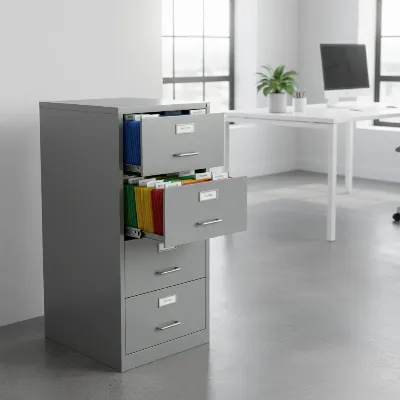 A sleek gray metal filing cabinet in a modern office, filled with organized, color-coded folders
Tips for Organizing and Maintaining Your Filing Cabinet
An efficient filing cabinet is the result of strategic organization and consistent maintenance. Here are essential tips to help you keep your documents in perfect order and your system running smoothly.
Decluttering First
Before you can organize, you must declutter. Empty your entire filing cabinet and sort through every document. Create three piles: Keep, Shred, and Recycle. Dispose of junk mail, outdated bills, expired warranties, and any other papers you no longer need. Use a shredder for documents containing personal or sensitive information to prevent identity theft. This initial purge is crucial for eliminating unnecessary bulk and creating space for truly important files.
Choosing a Filing System
The foundation of an organized cabinet is a consistent filing system. Common methods include:
- Alphabetical: Ideal for client names, supplier records, or personal documents, allowing for quick retrieval by name.
- Chronological: Best for time-sensitive documents like invoices, receipts, or contracts, organized from newest to oldest or vice versa.
- Category-Based/Thematic: Groups documents into broad categories (e.g., “Finances,” “Medical,” “Projects”) with subcategories (e.g., “Finances > Taxes,” “Finances > Bank Statements”). This intuitive system is highly flexible and expandable.
Select a method that aligns with how you think about and retrieve your documents.
Tools for Organization
The right tools make all the difference:
- Hanging Files: These sturdy folders hang on the cabinet rails and act as primary categories. They maximize space and prevent internal folders from slumping.
- Interior Folders: Place these inside hanging files to further subdivide categories. Use different colors to quickly identify document types within a main category.
- Dividers: Within a hanging file, dividers can separate subtopics or chronological sequences.
- Clear Labels: Legible, consistent labels on both hanging and interior folders are paramount. Consider a label maker for a professional look. Use clear, concise titles that indicate the content without being overly verbose. Color-coding labels can further enhance visual organization.
Strategic Arrangement
Allocate drawers strategically. Dedicate specific drawers to major categories (e.g., “Financial,” “Personal,” “Business Projects”). If you have an active filing system, place frequently accessed documents in easily reachable drawers. Consider a separate “incoming” tray or folder for new documents that need to be filed, processing them regularly to avoid accumulation. For active vs. permanent files, keep active resource materials easily accessible and permanent records, such as tax and legal documents, in less-frequented but secure locations.
Ongoing Maintenance
An organized filing cabinet requires ongoing effort, not a one-time fix.
- File Immediately: The golden rule of organization is to file documents as soon as they are no longer actively needed. Procrastination leads to piles and disarray.
- Set Review Times: Schedule a monthly or quarterly review to purge outdated documents, ensure everything is in its correct place, and assess if your categories still meet your needs. Annually, perform a comprehensive review and reorganize as necessary.
- Replenish Supplies: Always keep a stock of folders, labels, and dividers on hand to prevent delays in filing.
Digital Integration
For a truly modern and robust system, consider integrating digital solutions. Scan important documents like receipts, invoices, or statements into cloud-based storage services (e.g., Google Drive, Dropbox). Maintain backups of digital files. When creating digital folders, mirror your physical filing system structure for consistency and ease of retrieval. This hybrid approach reduces physical clutter and provides an important backup for critical information.
Filing Cabinet Prices on the Market
The price of a filing cabinet can vary widely, influenced by factors such as material, size, security features, brand reputation, and overall quality. Understanding these segments can help you align your budget with your organizational needs.
- Budget-Friendly Options (Under $100-$200): This category typically includes plastic cabinets or smaller, basic metal cabinets, often with two drawers. They are suitable for light home office use, occasional filing, or as supplementary storage. Security features are usually minimal, with simple locks, if any.
- Mid-Range Options ($200-$500): Here, you’ll find more robust metal cabinets, often with three or four drawers, and some entry-level wooden models. These cabinets offer better construction, smoother drawer glides, and more reliable locking mechanisms. They are a good choice for small businesses or home offices with moderate filing needs and a desire for durability.
- Premium Options ($500+): This segment includes high-quality, heavy-gauge steel cabinets, sophisticated wooden units, and specialized fireproof or water-resistant models. These cabinets boast superior durability, advanced security features (like anti-tilt mechanisms and multi-drawer locking), and often a more refined aesthetic. They are ideal for corporate environments, legal firms, or anyone needing to protect critical, irreplaceable documents. Larger lateral filing cabinets also often fall into this price range due to their increased material and complex construction.
Factors that significantly influence the price include the thickness of the steel, the type of wood (solid vs. veneer), the UL rating for fire resistance, the complexity of the locking system, and the overall craftsmanship and brand prestige. While it’s tempting to opt for the cheapest option, investing in a cabinet that meets your long-term needs for security and durability often proves more cost-effective in the long run.
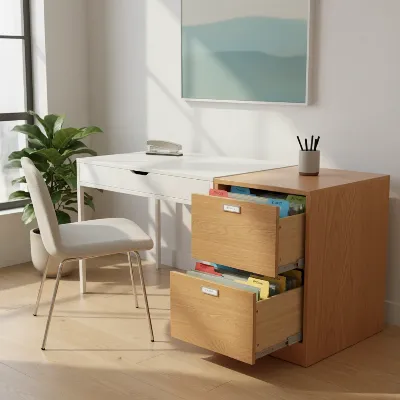 A modern wooden filing cabinet next to a tidy desk, with neatly labeled folders and office supplies
Conclusion
Creating and maintaining an organized filing cabinet is a testament to effective document management and a cornerstone of a productive workspace. By thoughtfully decluttering, establishing a consistent filing system, utilizing appropriate tools, and committing to regular maintenance, you transform a potential source of stress into a powerful organizational asset. This not only safeguards your important documents but also liberates valuable time and mental energy, allowing you to focus on what truly matters. Remember, a well-organized cabinet isn’t just about storing papers; it’s about smart information retrieval and peace of mind.
What single change will you make to your filing cabinet organization today to begin your journey towards a more efficient workspace?
Câu Hỏi Thường Gặp
How often should I purge documents from my filing cabinet?
It is recommended to conduct a thorough purge of your filing cabinet at least once a year. For highly active files, a quarterly review can prevent clutter from building up. Regularly decluttering ensures that only relevant documents take up valuable space.
What’s the best way to categorize mixed personal and business documents?
For mixed documents, create distinct main categories like “Personal” and “Business.” Within “Personal,” use subcategories for “Medical,” “Financial,” “Home,” etc. For “Business,” use subcategories for “Clients,” “Projects,” “Taxes,” and so on. Color-coding can further differentiate these primary categories visually.
Should I use alphabetical or chronological order for my files?
The best order depends on how you typically search for documents. Alphabetical order is ideal for finding documents by name (e.g., client files, vendor invoices). Chronological order is best for time-sensitive records like bills or contracts where the date is the primary identifier. A hybrid system, using categories first, then alphabetical or chronological within those categories, often works best.
Are fireproof filing cabinets really worth the investment for a home office?
Yes, fireproof Filing Cabinets are highly recommended for home offices, especially if you store irreplaceable documents like birth certificates, wills, deeds, or critical financial records. Standard cabinets offer no protection against fire, and the cost of replacing vital documents and the emotional distress can far outweigh the initial investment in a fire-rated cabinet.
How can I stop my filing cabinet from becoming messy again?
Consistency is key. Implement a “file immediately” rule for new documents. Schedule regular, short review sessions (e.g., 15 minutes monthly) to tidy up and remove unnecessary papers. Always ensure you have a fresh supply of folders and labels to avoid delays, which are often the root cause of new clutter.
Can I mix hanging files with standard folders in the same drawer?
Yes, you absolutely can. Hanging files are excellent for creating main categories, providing structure and support. Within each hanging file, you can then place several standard interior folders to organize subcategories or individual documents. This layered approach helps keep everything neat and easily accessible.
What should I do with old tax returns and financial statements?
Keep tax returns and supporting documents (receipts, W-2s) for at least seven years, as recommended by tax authorities. For other financial statements, check with your financial advisor or relevant regulations, but typically, keeping statements for 1-3 years is sufficient after reconciliation, especially if you have online access to historical records. Always shred sensitive documents securely before discarding.