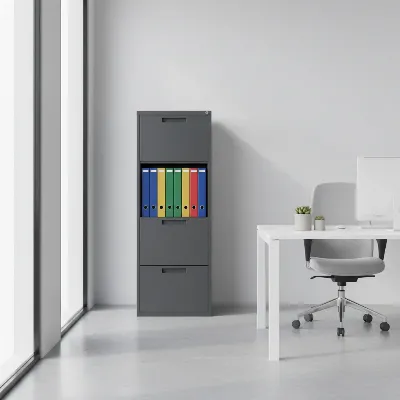
In today’s fast-paced work environment, maintaining a tidy and efficient office is crucial for productivity and peace of mind. A clutter-free desk not only makes a great impression but also enhances focus, and at the heart of an organized workspace often lies a reliable filing cabinet. For over a decade, I’ve advised businesses on optimizing their office storage, and the evolution of filing solutions has been remarkable. This article will delve into the world of filing cabinets, exploring their types, selection criteria, and maintenance tips, with a special focus on a standout model that beautifully marries form and function: the Laura Davidson Stockpile 3-Drawer File Cabinet. Join me as we uncover how this modern solution can transform your approach to document management and elevate your office aesthetics.
What is a Filing Cabinet?
A filing cabinet is an essential piece of office furniture designed to store and organize documents, papers, and other important files efficiently. Its primary purpose is to keep documents secure, easily accessible, and protected from damage or loss, preventing cluttered workspaces and misplaced critical information. By providing a centralized storage location, filing cabinets streamline workflow and enhance overall office productivity.
These cabinets come in various configurations, but at their core, they feature multiple drawers that can hold hanging file folders, allowing for systematic categorization of documents. Beyond basic storage, many modern filing cabinets offer enhanced security features, improved aesthetics, and mobility, adapting to the diverse needs of contemporary offices and home workspaces.
Types of Filing Cabinets
Filing cabinets are not one-size-fits-all; they vary widely in material, size, and functionality. Understanding the common types helps in selecting the perfect fit for your specific needs, balancing durability, aesthetics, and cost-effectiveness.
Steel Filing Cabinets
Steel filing cabinets are renowned for their exceptional durability and robust construction, making them a cornerstone in many office environments. Crafted from cold-rolled steel, these cabinets offer superior strength, often up to 20% stronger than non-cold-rolled alternatives, ensuring a long lifespan even with heavy daily use. Their surfaces are typically powder-coated or finished with baked enamel, providing resistance against scratches, scuffs, and corrosion.
Advantages:
- High Durability & Strength: Steel can withstand heavy loads and frequent use without warping or deforming, making it ideal for high-traffic areas and extensive document storage.
- Enhanced Security: Most steel cabinets integrate commercial-grade locking systems, offering robust protection for confidential documents. They can also be purchased with UL-classified fire ratings for additional protection against fire.
- Modern Aesthetic: Steel cabinets often feature sleek, clean lines and can be powder-coated in various colors, blending well with contemporary and minimalist office designs.
- Low Maintenance: They are easy to clean, resistant to pests and moisture, and require minimal upkeep to maintain their appearance and functionality.
Disadvantages:
- Weight: Steel cabinets can be quite heavy, making them challenging to move or relocate without proper equipment.
- Cost: Generally more expensive upfront than plastic or laminate options, though their longevity often makes them a cost-effective choice over time.
- Noise: Drawers can be noisy when opened or closed if not equipped with quality ball-bearing glides or soft-close mechanisms.
- Dents & Scratches: Despite their strength, sharp impacts can cause dents or scratches on thinner gauge steel, which are often permanent.
|
Our Picks for the Best Filing Cabinet in 2026
As an Amazon Associate I earn from qualifying purchases.
|
||
| Num | Product | Action |
|---|---|---|
| 1 | 2 Drawer Small File Cabinet with Lock, Farmhouse Vertical Filing Cabinet Fits Letter and A4 Size, Under Desk Wooden File Cabinets for Home Office, Printer Stand, Rustic White |

|
| 2 | Letaya 3 Drawer Mobile File Cabinet with Lock,Under Desk Metal Filing Cabinets for Home Office Organizer Letters/Legal/A4((Fully Assembled-Black) |
|
| 3 | 3 Drawer Small File Cabinet with Wheels, Farmhouse Vertical Filing Cabinet Fits Letter/A4 Size, Rolling File Cabinets Wooden Printer Stand for Home Office, Rustic White |
|
| 4 | 3 Drawer Tall File Cabinet with Wheels, Farmhouse Vertical Filing Cabinet Fits Letter/A4 Size, Rolling File Cabinets Wooden Printer Stand for Home Office, Rustic White |
|
| 5 | VASAGLE 2-Drawer File Cabinet, Small Rolling Filing Cabinet for Home Office, Printer Stand, for A4, Letter-Size Documents, 15.7 x 16.5 x 27.6 Inches, Ink Black UOFC040B16 |
|
| 6 | 2 Drawer Locking Filing Cabinet | Pre-Assembled Steel Construction | Space-Saving Design is Perfect for Home and Small Office | Letter-Size | Assembled in North America |
|
| 7 | HOOBRO 2 Drawer File Cabinet with Lock, Under Desk Mobile Filing Cabinet for Home Office, Wooden Farmhouse Office Storage Cabinet, Printer Stand Fits Letter and A4 Size, Walnut and White WH66WJ01 |
|
| 8 | VASAGLE 2-Drawer File Cabinet, Small Rolling Filing Cabinet for Home Office, Printer Stand, for A4, Letter-Size Documents, 15.7 x 16.5 x 27.6 Inches, Snow White UOFC040W46 |
|
| 9 | Lorell NuSparc 3 Drawer Locking Filing Cabinet | Pre-Assembled Steel Construction | Space-Saving Design is Perfect for Home and Small Office | Letter-Size | Assembled in North America |
|
| 10 | VASAGLE 2 Drawers File Cabinet with Lock, Printer Stand, Office Filing Cabinet Organizer, for A4 and Letter Size Documents, Ink Black UOFC061B16 |
|
Wood Filing Cabinets
Wood filing cabinets offer a classic, traditional aesthetic that brings warmth and sophistication to any office space. They are a popular choice for executive offices, reception areas, and home offices where blending with existing décor is a priority. These cabinets can be crafted from solid hardwood or engineered wood with veneers.
Advantages:
- Aesthetic Appeal: Wood provides a timeless and elegant look, enhancing the ambiance of a room. They come in a variety of finishes, offering versatility in design.
- Quieter Operation: Wood drawers generally produce less noise than metal, especially when fitted with quality runners.
- Repairability: Minor scratches or damage can often be sanded and refinished, allowing the cabinet to maintain a fresh look over time.
- Temperature Stability: Wood does not conduct heat or cold as readily as steel, making it potentially suitable for less temperature-sensitive items.
Disadvantages:
- Durability & Strength: While solid hardwood is strong, wood cabinets may not match the load-bearing capacity and impact resistance of steel. Veneered versions can be prone to chipping or peeling.
- Cost: Solid wood cabinets can be significantly more expensive than other materials.
- Maintenance: Wood may require more care, such as varnishing or protective coatings, and can be susceptible to moisture damage, warping, or pests over time.
- Security: Typically offer less inherent security than steel cabinets, as wood is easier to breach. Fire resistance is also minimal.
Plastic Filing Cabinets
Plastic filing cabinets are often the most budget-friendly and lightweight option, providing a practical solution for casual or dynamic workspaces, especially when portability is a key requirement. These cabinets are commonly made from durable polymers and are available in a wide array of colors.
Advantages:
- Cost-Effectiveness: Plastic options are generally more affordable, allowing for multiple cabinets to be acquired without a significant investment.
- Lightweight & Portable: Their light construction makes them incredibly easy to move, rearrange, or transport, often equipped with rolling casters.
- Aesthetic Versatility: Available in many colors and designs, plastic cabinets can easily blend with or act as a vibrant accent in any decor.
- Easy to Clean: Simple to maintain with just a damp cloth and mild soap, resisting rust and moisture damage.
Disadvantages:
- Durability & Security: Plastic cabinets are typically less robust than metal or wood, making them unsuitable for heavy-duty use or storing highly confidential documents. They offer limited security with basic locking mechanisms, if any.
- Longevity: May not withstand long-term wear and tear as effectively as other materials, potentially requiring replacement sooner.
- Load Capacity: Generally have lower weight capacities per drawer compared to steel or solid wood cabinets.
Mobile Filing Cabinets
Mobile filing cabinets are designed for ultimate flexibility and convenience, making them ideal for modern, agile workspaces and shared environments. These cabinets are typically smaller, compact units fitted with caster wheels, allowing them to be easily moved between workstations or tucked away under desks.
Advantages:
- Portability: Equipped with smooth-rolling casters (often lockable), they can be effortlessly repositioned, adapting to changing office layouts or individual needs.
- Space Optimization: Many models are designed to fit perfectly under desks, maximizing floor space in smaller offices or home workspaces.
- Versatility: Can serve multiple functions, acting as a file storage unit, a temporary side table, or a movable pedestal.
- Ease of Access: Allows users to bring their files directly to their workspace, reducing movement and improving efficiency.
Disadvantages:
- Limited Storage Capacity: Due to their compact size, mobile cabinets usually offer less storage space compared to larger vertical or lateral models.
- Stability Issues: When heavily loaded or with all drawers extended, they can sometimes be less stable than stationary cabinets, although many include anti-tip mechanisms.
- Security: While some mobile cabinets feature locks, the overall security may be less robust than heavy-duty fixed metal cabinets, especially if the cabinet itself can be easily moved.
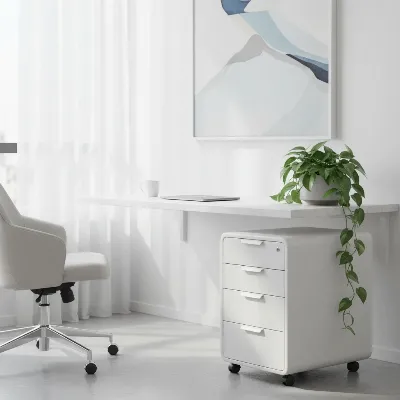 A sleek, modern mobile filing cabinet with three drawers, in a minimalist office setting with a desk and computer.
Comparison of Filing Cabinet Materials
Choosing the right filing cabinet often involves weighing various factors beyond just the type of filing system. The material plays a crucial role in the cabinet’s durability, aesthetic appeal, security, and cost. Below is a detailed comparison to help you make an informed decision.
| Feature | Steel Filing Cabinets | Wood Filing Cabinets | Plastic Filing Cabinets |
|---|---|---|---|
| Material | Cold-rolled, powder-coated steel | Solid wood, wood veneer over composite | High-grade plastic polymers |
| Durability | Excellent; resistant to impact, fire (with rating), corrosion, heavy loads. | Good to excellent (solid wood); moderate (veneered); susceptible to moisture. | Moderate; prone to cracking/breaking under heavy stress. |
| Strength/Load | Highest; engineered for substantial weight capacity per drawer (150-200 lbs). | Varies; solid wood is strong but less than steel; veneered can warp/loosen. | Lowest; suitable for lighter loads. |
| Security | Highest; integrated commercial-grade locks, often fire-rated options. | Moderate; relies on lock quality, less physical deterrent. | Lowest; basic locks, easy to breach. |
| Aesthetics | Modern, industrial, sleek; various powder-coat colors. | Traditional, elegant, warm; wide range of finishes/grains. | Casual, versatile; wide range of colors. |
| Maintenance | Low; easy to clean, resistant to pests. | Moderate; may require polishing, susceptible to pests/moisture. | Low; easy to clean. |
| Cost | High upfront, but cost-effective long-term. | High to very high (solid wood); moderate (veneered). | Lowest. |
| Portability | Heavy; difficult to move unless mobile unit. | Heavy; difficult to move. | Lightweight; very easy to move, often with casters. |
| Noise | Can be noisy without quality glides. | Generally quieter with good glides. | Quiet. |
| Fire Resistance | Can be fire-rated; standard metal offers some resistance. | Very low; combustible. | Very low; combustible. |
When choosing a filing cabinet, consider how often you will access documents, the level of security required, the weight and volume of files, and how the cabinet will integrate with your existing office decor. For high-security, heavy-duty needs, steel is unmatched. For aesthetic warmth in a less demanding setting, wood is a great choice. For flexibility and budget-friendliness, plastic or mobile options excel.
Guide to Choosing a Filing Cabinet (Buying Guide)
Selecting the ideal filing cabinet for your office is a strategic decision that impacts organization, efficiency, and aesthetics. With numerous options available, a thoughtful approach ensures you invest in a solution that perfectly meets your long-term needs.
1. Assess Your Usage Needs
Begin by evaluating your current and future document storage requirements. Consider the volume of documents you need to store—do you have a few essential papers or vast archives? The types of files also matter: are they standard letter/legal size, blueprints, or other oversized documents? Think about the frequency of access; frequently used files might benefit from easily accessible drawers, while archival documents can be stored in less prominent cabinets. Also, factor in the number of users who will need access to the cabinet, as this can influence security features and placement.
2. Choose the Right Material
The material dictates durability, security, and appearance.
- Steel: Best for high security, heavy-duty use, and modern aesthetics. Offers superior fire resistance (with proper ratings) and longevity.
- Wood: Provides a traditional, elegant look. Ideal for executive offices or home settings where aesthetics are paramount. Less durable than steel for heavy loads but can be repaired.
- Plastic/Laminate: Most affordable and lightweight, perfect for light use or mobile needs. Offers aesthetic versatility but sacrifices durability and security.
3. Select Appropriate Size and Style
Measure your available office space meticulously, including width, depth, and height, to ensure the cabinet fits comfortably and allows for full drawer extension. Consider whether a vertical filing cabinet (narrow, tall, space-saving) or a lateral filing cabinet (wide, shorter, better for large volumes) suits your layout. If your workspace is dynamic, a mobile filing cabinet with casters might be the best choice to move documents wherever needed. Match the cabinet’s style and color to your existing office furniture and decor to create a cohesive look.
4. Prioritize Security Features
For sensitive or confidential documents, security is non-negotiable. Look for cabinets with robust locking mechanisms – a central lock that secures all drawers simultaneously is often preferred. Consider features like anti-tip mechanisms that prevent the cabinet from tipping when multiple drawers are open, enhancing safety. For maximum protection against unforeseen events, explore options with fireproof or water-resistant ratings, especially for vital records.
5. Research Brands and Suppliers
Opt for reputable brands known for quality and customer service. Read reviews and look for products with clear warranty information, which indicates the manufacturer’s confidence in their product. A reliable supplier can also offer insights and support should any issues arise.
6. Set Your Budget
Filing cabinet prices vary widely based on material, size, features, and brand. Establish a realistic budget, but remember that investing in a higher-quality cabinet often translates to better durability, security, and longevity, making it more cost-effective in the long run. Balance initial cost with the overall value and expected lifespan.
Popular Models of Filing Cabinets
While the market offers a vast array of filing cabinets, certain models stand out for their blend of design, functionality, and user satisfaction. Among these, the Laura Davidson Stockpile 3-Drawer File Cabinet has garnered attention for its modern aesthetic and practical features, making it a highly favored choice for contemporary workspaces.
The Laura Davidson Stockpile 3-Drawer File Cabinet
The Laura Davidson Stockpile 3-Drawer File Cabinet is a prime example of modern office furniture that combines sophisticated design with robust functionality. This cabinet is crafted from cold-rolled, powder-coated steel, offering both exceptional durability and a sleek appearance. Its signature feature is a contemporary design with smooth surfaces, rounded corners, and inset handles, distinguishing it from traditional, often utilitarian, filing solutions. This design approach ensures the cabinet not only serves a practical purpose but also enhances the overall aesthetic of any modern office or home workspace.
Key Features and Benefits:
- Material and Construction: Made from high-quality cold-rolled steel with a powder-coated finish, the Stockpile cabinet is built for strength and longevity. This construction provides resistance to wear and tear, ensuring it remains a reliable part of your office for years.
- Smooth Glide Drawers: Each of the three drawers is equipped with high-quality ball-bearing glides, ensuring smooth, quiet, and full extension. This feature allows easy access to files, preventing frustrating drawer jams.
- Versatile Filing: The bottom drawer is specifically designed to accommodate both US letter and legal-size hanging files, eliminating the need for additional racks or assembly. The second drawer often includes a divider for better organization of smaller items, while the top drawer typically features a pencil tray.
- Enhanced Security: A central locking mechanism secures all three drawers simultaneously with two unique keys provided, offering peace of mind for confidential documents. Some versions have an anti-tip feature where only one drawer can be opened at a time for safety.
- Mobility and Stability: This cabinet offers flexibility with interchangeable stationary feet and rolling wheels (casters). You can choose between full mobility for dynamic workspaces or stable placement with adjustable leveling feet. The front casters are usually lockable for added stability.
- Dimensions and Fit: With typical dimensions around 27.32″ H x 14.25″ W x 18″ D, or 23″ H x 16″ W x 20″ D for some models, it’s designed to fit conveniently under most standard desks or function as a freestanding unit.
- Pre-Assembled: The cabinet typically arrives fully assembled, requiring only the attachment of the chosen feet or casters, making setup quick and hassle-free.
- Aesthetic Options: Available in a variety of colors, including popular white-on-white, aqua, yellow, green, blue, dark grey, and red, allowing for personalization to match any office decor. The flat top surface is also suitable for holding office decor or plants.
Pros:
- Stylish, modern design with rounded edges that softens the look of an office.
- Durable cold-rolled steel construction with a baked enamel or powder-coat finish.
- Smooth, quiet, full-extension drawers.
- Supports both letter and legal-size hanging files without extra hardware.
- Includes useful accessories like a pencil tray and drawer divider.
- Versatile with both wheels and stationary feet options.
- Comes pre-assembled (casters/feet attachment excepted).
- Centralized locking system for all drawers.
Cons:
- May be heavier than plastic options, making initial placement (without wheels) more challenging.
- Price point is higher than basic plastic or laminate cabinets.
- Some newer versions may have a single-drawer locking mechanism rather than locking all simultaneously (though older models typically lock all).
The Laura Davidson Stockpile 3-Drawer File Cabinet is an excellent choice for those seeking a high-quality, secure, and aesthetically pleasing storage solution that complements a modern office environment. Its robust build and thoughtful features make it a worthwhile investment for organizing important documents efficiently.
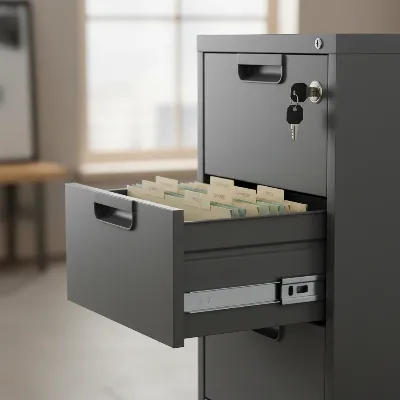 A close-up of the Laura Davidson Stockpile 3-drawer file cabinet highlighting its smooth glides and locking mechanism.
Tips for Arranging and Maintaining Your Filing Cabinet
An efficient filing cabinet is only as good as the system it supports and the care it receives. Implementing smart organization techniques and routine maintenance can significantly extend its lifespan and maximize its utility.
How to Arrange Files Scientifically for Easy Retrieval
- Categorize Logically: Start by grouping documents into broad categories (e.g., invoices, contracts, HR, projects). Use sub-categories within these main groups.
- Alphabetical or Chronological Order: Within each category, arrange files either alphabetically (by client name, project name) or chronologically (by date), depending on which method makes retrieval easiest for you.
- Color-Coded System: Utilize color-coded folders or labels to visually distinguish different categories. This allows for quick identification and reduces search time.
- Clear Labeling: Ensure all folders and drawers are clearly and consistently labeled. Use concise but descriptive names.
- Purge Regularly: Schedule regular times (e.g., quarterly or annually) to review and purge old or unnecessary documents. This prevents clutter and ensures only relevant files are stored.
- Utilize Dividers and Trays: For multi-purpose drawers (like those in the Laura Davidson Stockpile), use included dividers for small office supplies and trays for pens, paper clips, etc., to keep items from mixing.
- Don’t Overstuff: Avoid cramming too many files into one drawer, as this makes it difficult to retrieve and can damage folders or the drawer mechanism. Leave some room for growth.
Tips for Keeping Your Filing Cabinet Clean and Durable
- Regular Cleaning: Wipe down the exterior of your cabinet with a soft, damp cloth and a mild cleaner (if needed) to remove dust and fingerprints. For steel cabinets, avoid abrasive cleaners that could damage the powder-coat finish.
- Lubricate Drawers (if necessary): If drawers start to stick or squeak, a light application of silicone spray lubricant on the ball-bearing glides can restore smooth operation. (Always check manufacturer recommendations first.)
- Check for Moisture: Especially for wooden cabinets, ensure the cabinet is not in a damp environment, which can lead to warping or mold. For metal, quickly wipe away any spills to prevent rust.
- Avoid Overloading: Adhere to the manufacturer’s weight capacity limits per drawer. Overloading can strain the drawer slides and compromise the cabinet’s structural integrity.
- Use Proper Lifting Techniques: If moving a heavy cabinet, empty the drawers first and use appropriate lifting equipment or assistance to prevent injury and damage to the cabinet.
- Secure Locks: Regularly check the locking mechanism to ensure it functions smoothly. Lubricate with graphite powder if the key becomes stiff.
- Protect the Surface: If placing items on top of the cabinet, use protective pads or coasters to prevent scratches or stains. For steel cabinets, magnets can be a fun and practical way to attach notes or photos.
How to Handle Common Problems
- Stuck Drawer: First, ensure it’s not overloaded. Gently wiggle the drawer while pulling. If it has an anti-tip mechanism, ensure no other drawers are open. If it’s a ball-bearing slide, check if any bearings have dislodged.
- Stiff Lock: Apply a small amount of graphite powder (from a pencil tip) to the key and insert it into the lock several times. Avoid oil-based lubricants, as they can attract dust.
- Dents or Scratches: For steel, small scratches can sometimes be touched up with matching paint (if available from the manufacturer). Dents are usually permanent. For wood, minor scratches can be buffed out, and deeper ones might be repairable by a professional.
- Wobbly Cabinet: If it’s a mobile cabinet, ensure the caster locks are engaged. For any cabinet, check if the adjustable leveling feet (if present) need to be adjusted to stabilize it on uneven floors.
By consistently applying these arrangement and maintenance practices, your filing cabinet, like the robust Laura Davidson Stockpile, will remain an organized, secure, and aesthetically pleasing asset to your workspace for many years.
Price of Filing Cabinets on the Market
The price of filing cabinets varies significantly, influenced by factors such as material, size, brand, features, and design. Understanding these price ranges can help you budget effectively for your office storage needs.
Price Segments for Filing Cabinets
- Budget-Friendly ($50 – $150): This segment typically includes smaller, two-drawer plastic or lightweight metal cabinets. These are suitable for minimal filing needs, home offices, or temporary solutions where security and heavy-duty use are not primary concerns. Mobile plastic units often fall into this range.
- Mid-Range ($150 – $500): Most common for small to medium businesses and home offices, this category offers a wider selection of materials like powder-coated steel (like the Laura Davidson Stockpile 3-Drawer File Cabinet) or laminate. You’ll find two- to four-drawer vertical and lateral cabinets, often with basic locking mechanisms and smooth-gliding drawers. This range balances cost with improved durability and aesthetics.
- High-End ($500 – $2000+): This segment caters to commercial-grade needs, executive offices, or specific security requirements. It includes heavy-gauge steel cabinets, often with advanced security features like fireproof ratings, anti-tip mechanisms, and robust central locking systems. Solid wood filing cabinets with intricate designs and superior craftsmanship also fall into this category. These cabinets are built for maximum longevity, security, and professional appearance.
Factors Influencing Filing Cabinet Price
- Material: As discussed, steel is generally more expensive than plastic or laminate due to its durability and security features, while solid wood can be among the highest-priced options for its aesthetic value.
- Size and Capacity: Cabinets with more drawers or larger dimensions (e.g., lateral cabinets offering greater width) will naturally cost more than compact, two-drawer vertical units.
- Features: Additional functionalities like advanced locking systems, fireproof insulation, anti-tip mechanisms, full-extension ball-bearing glides, adjustable feet, and included accessories (pencil trays, dividers) increase the price.
- Brand and Design: Reputable brands known for quality and design innovation often command higher prices. Cabinets with modern, unique designs (like the rounded corners and inset handles of the Laura Davidson Stockpile) can also be more expensive than standard utilitarian models.
- Assembly: Pre-assembled cabinets tend to be slightly more expensive than those requiring full assembly, as they save time and effort.
- Warranty: Products with extended warranties often reflect a higher perceived quality and can influence pricing.
Comparing Prices Across Suppliers
It’s advisable to compare prices from various office furniture suppliers, online retailers, and direct manufacturers. While the Laura Davidson Stockpile 3-Drawer File Cabinet might fall into the mid-range category, prices can fluctuate due to sales, promotions, or shipping costs. Always check the exact specifications to ensure you are comparing similar models. For instance, some retailers might offer slightly different configurations or accessories, affecting the final price.
Investing in a filing cabinet is an investment in organization and security. While it’s tempting to opt for the cheapest option, considering the long-term benefits of durability, security, and functionality often justifies a mid-range or higher-end purchase, ensuring your documents are well-protected and your office remains efficient.
Conclusion
Choosing the right filing cabinet is a pivotal decision for any organized workspace, transforming clutter into clarity and enhancing overall productivity. From understanding the distinct advantages and disadvantages of steel, wood, and plastic materials to considering the mobility offered by rolling units, each choice impacts how effectively you manage your documents. Key factors like assessing your storage needs, prioritizing security, and selecting an appropriate size and style are essential steps in this process.
The Laura Davidson Stockpile 3-Drawer File Cabinet stands out as an exemplary choice, marrying robust cold-rolled steel construction with a sleek, modern design. Its smooth-gliding, lockable drawers, versatile filing capacity, and options for both stationary feet and mobile casters make it a highly functional and aesthetically pleasing addition to any contemporary office. By adopting scientific arrangement methods and consistent maintenance, your chosen filing cabinet will serve as a reliable guardian of your important information for years to come.
What role does a well-organized filing system play in your daily workflow, and how has your approach to document management evolved over time?
Frequently Asked Questions
What is the primary benefit of using a cold-rolled steel filing cabinet?
The primary benefit of a cold-rolled steel filing cabinet, such as the Laura Davidson Stockpile, is its superior durability and strength. This manufacturing process enhances the steel’s hardness and allows for more precise shaping, resulting in a more robust and long-lasting cabinet that can withstand heavy use and offers enhanced security for important documents.
Can the Laura Davidson Stockpile 3-Drawer File Cabinet fit under a standard desk?
Yes, the Laura Davidson Stockpile 3-Drawer File Cabinet is designed to fit conveniently under most standard desks. Its dimensions are typically around 23-27 inches in height, making it suitable for under-desk placement without hindering legroom or accessibility, optimizing your workspace.
Are the drawers of the Laura Davidson Stockpile cabinet quiet when opening and closing?
The drawers of the Laura Davidson Stockpile cabinet are known for their smooth and quiet operation. They feature high-quality ball-bearing glides that ensure a silky-smooth and almost silent opening and closing, contributing to a more peaceful and focused work environment.
Does the Laura Davidson Stockpile filing cabinet come pre-assembled?
Yes, the Laura Davidson Stockpile 3-Drawer File Cabinet typically arrives fully assembled. This means you only need to attach the provided stationary feet or rolling casters, saving significant time and effort during setup and allowing for immediate use upon delivery.
How do I ensure my sensitive documents are secure in a filing cabinet?
To ensure sensitive documents are secure, choose a Filing Cabinet with a robust locking mechanism, preferably one that locks all drawers simultaneously. For ultimate protection, consider fireproof or water-resistant models. Additionally, practice good organizational habits by regularly purging unnecessary documents and ensuring only authorized personnel have access to keys.
Can I use both letter and legal-size files in the Laura Davidson Stockpile cabinet?
Yes, the Laura Davidson Stockpile 3-Drawer File Cabinet is specifically designed to accommodate both US letter and legal-size hanging files. Its bottom drawer often features universal rails, eliminating the need for any additional hardware or specialized racks to fit different document sizes.