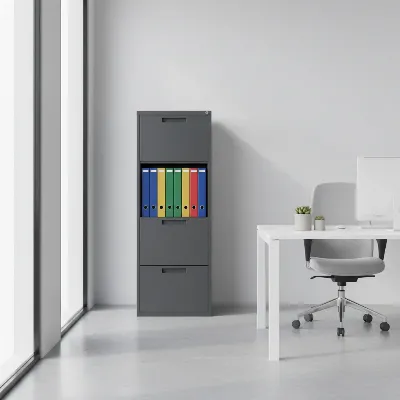
Few things are as frustrating as staring at a locked filing cabinet, knowing important documents or cherished items are inside, but the key is nowhere to be found. Whether it’s a misplaced key, a forgotten combination, or an inherited cabinet without its original access, regaining entry safely and without damage is crucial. This guide will walk you through various methods, from simple DIY tricks to knowing when to call a professional, ensuring you can unlock your filing cabinet efficiently and securely.
Understanding Filing Cabinet Locks
Before attempting any unlocking method, it’s helpful to understand the basic types of locks commonly found on filing cabinets. This knowledge can guide your approach and help you choose the most effective and least destructive method.
Cam Locks: These are arguably the most prevalent type of lock found on standard office furniture. They consist of a cylinder that rotates a cam, which then engages or disengages a latch mechanism. Cam locks are generally simpler in design, making them relatively easier to pick or bypass with basic tools [cite: 1.1, 2.1, 4.2].
Pin Tumbler Locks: Often used in older or more robust filing cabinets, pin tumbler locks operate using a series of pins of varying lengths. When the correct key is inserted, these pins align, allowing the cylinder to turn. While more secure than basic cam locks, they can still be picked with patience and the right tools [cite: 4.1, 2.3].
Tubular Locks: Recognizable by their round key and keyhole, tubular locks offer a higher level of security than traditional cam or pin tumbler locks. Their unique design makes them more resistant to standard lock-picking techniques, often requiring specialized tools [cite: 1.2, 2.2, 5.3].
Combination Locks: These modern locks eliminate the need for a physical key, relying instead on a numerical code entered via a dial or digital keypad. If the combination is forgotten, unlocking without the code usually requires manufacturer assistance or specialized bypass tools, as picking is not an option [cite: 4.1].
Essential Safety Precautions Before You Begin
Attempting to open a locked filing cabinet without its key carries inherent risks. Prioritizing safety and minimizing potential damage is paramount. Always approach the task with caution and patience.
- Prioritize Non-Destructive Methods: Always start with techniques that have the least potential to damage your cabinet or its contents. Destructive methods should be considered an absolute last resort.
- Work Slowly and Patiently: Rushing can lead to mistakes, scratches, dents, or even broken tools stuck inside the lock. Gentle, deliberate movements are more effective and safer [cite: 4.5].
- Avoid Excessive Force: If a method isn’t working, don’t resort to brute force. Prying or hammering can cause irreparable damage to the cabinet’s structure and contents, and may also lead to personal injury [cite: 4.5].
- Understand the Risks: Be aware that even non-destructive methods carry a slight risk of damaging the lock, rendering it unusable without replacement. Destructive methods will almost certainly require lock replacement and possibly cabinet repair.
- Legality and Ownership: Ensure you have legal authorization to open the cabinet. Attempting to open a cabinet that doesn’t belong to you or contains sensitive information without proper consent can have serious legal consequences [cite: 2.3].
- Assess Contents: If the cabinet contains highly valuable, confidential, or fragile items, consider calling a professional locksmith immediately rather than attempting DIY methods. The cost of a locksmith is often less than the potential cost of damage or loss [cite: 4.3].
Non-Destructive Methods to Unlock Your Filing Cabinet
Many common filing cabinets can be opened without a key using simple household items or basic tools. These methods require a steady hand and a bit of patience.
Checking for a Spare Key or Manufacturer Support
|
Our Picks for the Best Filing Cabinet in 2026
As an Amazon Associate I earn from qualifying purchases.
|
||
| Num | Product | Action |
|---|---|---|
| 1 | 2 Drawer Small File Cabinet with Lock, Farmhouse Vertical Filing Cabinet Fits Letter and A4 Size, Under Desk Wooden File Cabinets for Home Office, Printer Stand, Rustic White |

|
| 2 | VASAGLE 2-Drawer File Cabinet, Small Rolling Filing Cabinet for Home Office, Printer Stand, for A4, Letter-Size Documents, 15.7 x 16.5 x 27.6 Inches, Snow White UOFC040W46 |
|
| 3 | 2 Drawer Locking Filing Cabinet | Pre-Assembled Steel Construction | Space-Saving Design is Perfect for Home and Small Office | Letter-Size | Assembled in North America |
|
| 4 | 3 Drawer Tall File Cabinet with Wheels, Farmhouse Vertical Filing Cabinet Fits Letter/A4 Size, Rolling File Cabinets Wooden Printer Stand for Home Office, Rustic White |
|
| 5 | HOOBRO 2 Drawer File Cabinet with Lock, Under Desk Mobile Filing Cabinet for Home Office, Wooden Farmhouse Office Storage Cabinet, Printer Stand Fits Letter and A4 Size, Walnut and White WH66WJ01 |
|
| 6 | Lorell NuSparc 3 Drawer Locking Filing Cabinet | Pre-Assembled Steel Construction | Space-Saving Design is Perfect for Home and Small Office | Letter-Size | Assembled in North America |
|
| 7 | VASAGLE 2 Drawers File Cabinet with Lock, Printer Stand, Office Filing Cabinet Organizer, for A4 and Letter Size Documents, Ink Black UOFC061B16 |
|
| 8 | VASAGLE 2-Drawer File Cabinet, Small Rolling Filing Cabinet for Home Office, Printer Stand, for A4, Letter-Size Documents, 15.7 x 16.5 x 27.6 Inches, Ink Black UOFC040B16 |
|
| 9 | 3 Drawer Small File Cabinet with Wheels, Farmhouse Vertical Filing Cabinet Fits Letter/A4 Size, Rolling File Cabinets Wooden Printer Stand for Home Office, Rustic White |
|
| 10 | Letaya 3 Drawer Mobile File Cabinet with Lock,Under Desk Metal Filing Cabinets for Home Office Organizer Letters/Legal/A4((Fully Assembled-Black) |
|
Before reaching for tools, perform a thorough search for any spare keys. Many filing cabinets come with duplicates, which might be stored in a desk drawer, a designated key safe, or with an administrative contact. If you have the cabinet’s model number or brand information, contacting the manufacturer can sometimes yield results. They may be able to provide a replacement key based on the lock’s serial number, which is often found on the lock face or body [cite: 1.1, 3.1].
The Paperclip or Bobby Pin Method (for Key Locks)
This classic method is surprisingly effective on simpler pin tumbler or wafer locks. You’ll need two paperclips or bobby pins.
Tools:
- Two sturdy paperclips or bobby pins.
- Pliers (optional, for bending).
Technique:
- Create a Tension Wrench: Straighten one paperclip or bobby pin and bend one end into a small “L” shape. This will be your tension wrench. Insert it into the bottom of the keyhole, applying gentle, constant pressure in the direction the key would normally turn to unlock it [cite: 1.4, 2.4, 4.5, 5.2].
- Create a Pick: Straighten the second paperclip or bobby pin and bend a small hook or slight curve at one end. This will be your pick [cite: 2.4, 4.5, 5.2].
- Manipulate the Pins: Insert the pick into the top half of the keyhole, above the tension wrench. Gently feel for the internal pins. While maintaining tension on the wrench, lightly jiggle and push the pick upwards, one pin at a time. You should feel slight clicks as the pins set. The goal is to align all the pins simultaneously [cite: 2.4, 4.5, 5.2].
- Turn the Lock: Once all pins are set, the lock cylinder should turn slightly with the tension wrench. Apply a bit more pressure with the tension wrench to fully rotate the cylinder and unlock the cabinet [cite: 1.4, 2.4].
Safety: Work slowly. Avoid excessive force, which can bend or break the tools inside the lock, making the situation worse. This method requires practice and a delicate touch.
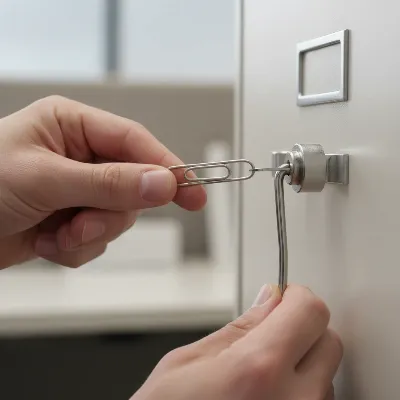 A person using a paperclip and a tension wrench to pick a filing cabinet lock
The Shim or Bypass Tool Method (for Simpler Latch Mechanisms)
Some older or less secure filing cabinets have simple spring-loaded latches that can be bypassed. This method is often called the “slim jim” approach.
Tools:
- A thin, rigid, yet flexible object like a credit card, plastic sheet, putty knife, or a slim metal strip.
Technique:
- Identify the Latch: Locate the lock mechanism, typically on the side of the drawer near the front. The goal is to reach the spring-loaded latch that holds the drawer shut.
- Slide the Tool: Insert your thin tool into the gap between the locked drawer and the cabinet frame, as close to the lock mechanism as possible [cite: 2.4, 4.5].
- Wiggle and Apply Pressure: Gently wiggle the tool while simultaneously applying pressure to the drawer, either pushing it in or pulling it out slightly. Try to “feel” for the latch and then push or slide it inward to release the drawer. This may require some trial and error, as the exact position of the latch varies by cabinet model [cite: 2.4].
Safety: Be careful not to scratch the cabinet’s finish. Avoid forcing the tool, as it could break or get stuck. This method is generally effective only on older cabinets with simpler locking mechanisms.
Resetting Combination Locks (if applicable)
If your filing cabinet uses a combination lock and you’ve forgotten the code, direct unlocking without the key is not possible. However, there are a few alternatives:
- Try Common Combinations: Many people use easy-to-remember numbers like “0000,” “1234,” “2580,” their birthdate, or the company’s founding year. Try these common defaults first.
- Manufacturer Guidelines: Some combination locks, especially digital ones, might have a reset feature, often requiring a master key or a specific sequence of buttons [cite: 1.1, 4.3]. Consult the cabinet’s manual or the manufacturer’s website for instructions.
- Professional Assistance: If all else fails, a locksmith or the cabinet manufacturer may be able to decode or reset the combination.
Professional Lock Picking (with proper tools)
For those with some experience or an interest in locksmithing, a basic lock pick set can be used. These sets typically include various picks and tension wrenches designed for different lock types.
Tools:
- A dedicated lock pick set (tension wrench, hook pick, rake pick).
Technique:
- Insert Tension Wrench: Place the tension wrench in the keyway and apply light rotational pressure.
- Pick the Pins: Use a hook or rake pick to manipulate the pins inside the lock cylinder. The goal is similar to the paperclip method: to set all the pins to their shear line while maintaining tension, allowing the cylinder to turn [cite: 2.3, 4.1].
- Practice is Key: Lock picking is a learned skill that requires significant practice to master. It’s often recommended to practice on transparent or training locks before attempting to pick a functional lock.
Safety: Improper lock picking can permanently damage the internal mechanism, making it impossible to open even with the correct key and necessitating lock replacement.
Destructive Methods (Last Resort Only)
If non-destructive methods have failed, and the contents of the cabinet are critical, destructive methods might be considered. However, these will inevitably damage the lock and potentially the cabinet itself. Only attempt these if you are prepared for the repair or replacement costs.
Drilling the Lock
Drilling the lock cylinder effectively destroys its internal mechanism, allowing the cam to disengage. This should only be done if you are absolutely certain no other option remains.
Tools:
- Electric drill.
- Metal drill bit (e.g., cobalt or titanium, size appropriate for the lock cylinder).
- Safety glasses.
- Gloves.
- Center punch and hammer (optional, to start the hole).
Technique:
- Wear Safety Gear: Always wear safety glasses and gloves to protect against metal fragments.
- Mark the Spot: Identify the shear line of the lock cylinder (where the pins align). If unsure, drill directly into the center of the keyway. A center punch can help create an indentation to prevent the drill bit from slipping.
- Drill Slowly: Start drilling with a small bit, then gradually increase the bit size if needed. Maintain a steady hand and apply firm, consistent pressure. The goal is to destroy the pins and the internal mechanism, allowing the cylinder to turn freely [cite: 1.1, 4.3].
- Test and Open: Once the pins are destroyed, you should be able to turn the cylinder with a screwdriver or the tension wrench.
Consequences: The lock will be destroyed and will need to be replaced. There is also a risk of damaging the cabinet face around the lock if not done carefully.
Prying or Forcing the Lock/Drawer
This is the most destructive method and carries the highest risk of injury and severe damage to the cabinet. It should be avoided unless the cabinet itself is considered disposable and the contents are critically urgent.
Tools:
- Crowbar, large flat-head screwdriver, or pry bar.
Technique:
- Identify Weak Points: Attempt to pry at the seams of the drawer near the locking mechanism, or directly apply force to the lock itself.
- Apply Force: Gradually increase pressure, trying to bend the metal or break the locking components.
Consequences: This method will almost certainly deform the drawer or cabinet frame, making it difficult or impossible to close properly even after opening. It can also damage the contents inside. The risk of slippage, leading to injury, is very high.
When to Call a Professional Locksmith
While DIY methods can be tempting, there are clear situations where calling a professional locksmith is the smartest and safest option.
- When Non-Destructive Methods Fail: If you’ve tried the paperclip or shim methods without success, especially on more complex locks, a locksmith has specialized tools and training.
- For High-Security or Valuable Contents: If the cabinet holds sensitive documents, irreplaceable heirlooms, or significant cash, the potential cost of damage from DIY attempts far outweighs a locksmith’s fee.
- Lack of Tools or Expertise: If you don’t have the appropriate tools, or feel uncomfortable attempting a delicate procedure, a professional can handle it without unnecessary risks.
- To Avoid Damage and Maintain Warranty: Locksmiths are trained to open locks with minimal or no damage, preserving the cabinet’s integrity and any existing warranties [cite: 1.1, 4.3].
- Complex or Unusual Locks: Some modern filing cabinets feature advanced locking systems (e.g., multi-point locks, electronic failures) that are beyond basic picking techniques.
> “While a DIY approach can be satisfying, remember that a professional locksmith’s expertise not only ensures access but also protects your property from unintended harm. When in doubt, call a pro.” – John Smith, Certified Locksmith & Security Consultant
Preventing Future Lockouts
Once you’ve successfully regained access to your filing cabinet, take proactive steps to prevent future lockouts.
- Keep Spare Keys Secure: Designate a secure, but easily accessible, location for a spare key. Consider a small key safe, a trusted colleague, or a combination lock box. Label it clearly but discreetly.
- Document Combinations: For combination locks, record the code in a secure, separate location. Avoid writing it directly on the cabinet or a sticky note nearby. A password manager or a fireproof safe are good options.
- Regular Lock Maintenance: Periodically lubricate key locks with graphite powder or a specialized lock lubricant to ensure smooth operation. Test combination locks to ensure the mechanism isn’t sticking.
- Consider Upgrading: If your current lock is old, flimsy, or prone to issues, consider upgrading to a more reliable lock type, such as a higher-security tubular lock or an electronic keypad lock.
- Organize Keys: If you manage multiple cabinets, use a key management system with clear labeling to avoid confusion.
Conclusion
Losing the key to a filing cabinet can be a stressful experience, but with the right approach, you can regain access safely and effectively. Always begin with non-destructive methods like the paperclip trick or shimming, exercising patience and a gentle touch. Understand the type of lock you’re dealing with to choose the most appropriate method. Remember that destructive options, such as drilling, should only be considered as a last resort due to the high risk of permanent damage. When in doubt, or if the contents are valuable, consulting a professional locksmith is always the safest course of action. By following these guidelines and implementing preventive measures, you can ensure your important documents remain accessible and secure. What steps will you take today to prevent your next filing cabinet lockout?
Câu Hỏi Thường Gặp
Can a paperclip really open any filing cabinet lock?
No, a paperclip or bobby pin method is generally effective only on simpler pin tumbler or wafer locks, often found in older or less secure filing cabinets. More complex, modern, or high-security locks like tubular locks or combination locks are unlikely to be opened this way and require specialized tools or professional intervention.
What tools do locksmiths use to open filing cabinets?
Professional locksmiths utilize a range of specialized tools, including tension wrenches, various picks (hook, rake, diamond), bypass tools, impressioning tools, and often boroscopes for inspection. For combination locks, they may have decoding tools or non-destructive entry techniques tailored to specific models.
Will I damage my filing cabinet if I try to open it myself?
There is always a risk of damage when attempting to open a filing cabinet without a key. Non-destructive methods, if performed carefully and patiently, have a lower risk of damage. However, aggressive attempts or using destructive methods like drilling or prying almost guarantee damage to the lock and potentially the cabinet’s finish or structure.
How can I find the serial number for a replacement key?
The serial number for a filing cabinet lock is typically stamped on the face of the lock cylinder, the lock body, or sometimes on the cabinet frame near the lock. If you can identify the manufacturer, they might be able to help you source a replacement key using this number.
Is it illegal to open a filing cabinet without a key?
It is legal to open a filing cabinet that you own and have legal right to access, even without the key. However, it is illegal and unethical to open a Filing Cabinet that does not belong to you, or one for which you do not have authorization to access, regardless of whether you use a key or not. Always ensure you have the proper authority before attempting to unlock any cabinet.